
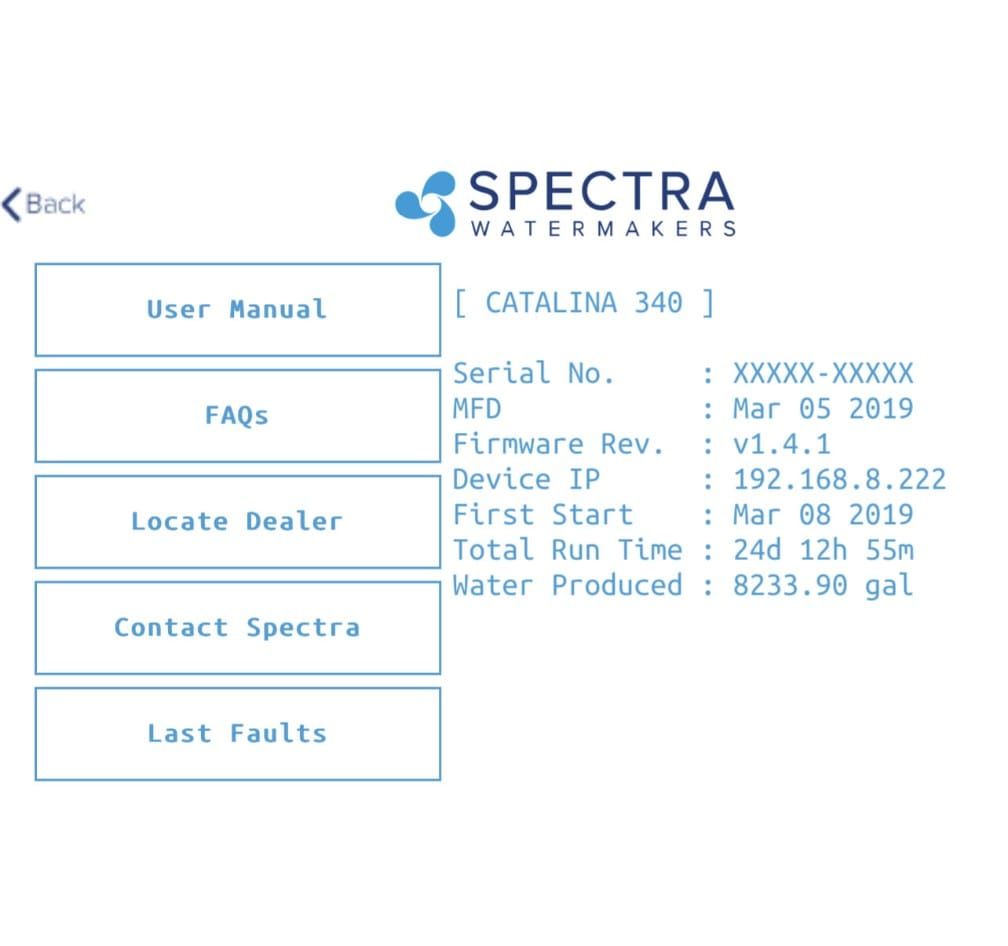
There's a specific kind of quiet that settles over a boat when you finally admit a piece of equipment is never going to work again. We had that quiet in a Martinique anchorage the day the Paguro service center called to say they were giving up on our generator. And we had it again, a few years and one ocean later, standing over the Spectra watermaker we'd just spent four thousand dollars on, failing to resurrect.
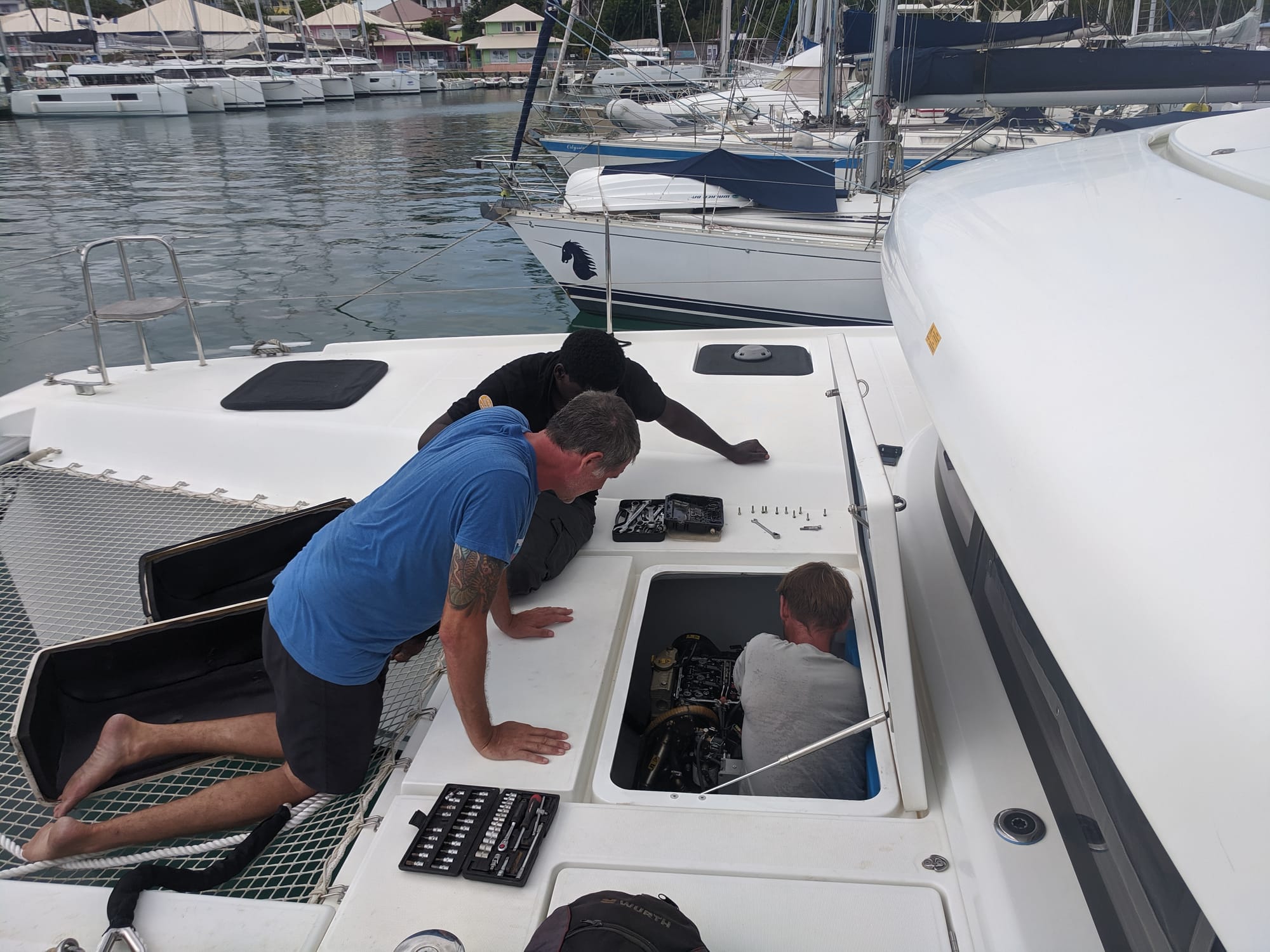
Making fresh water is not optional on a cruising boat. It's the difference between real independence and being tethered to a dock and a hose. So over the years aboard Sabado we've owned three watermakers, chased down two continents' worth of spare parts, and learned the hard way what actually matters when you choose one. I want to walk through all of it, the failures of the equipment and, honestly, some of our own because I think our mistakes were reasonable given what we knew and what we had on the boat at the time. And I think the lessons are worth more than the water.
Why the watermaker is the hardest system on the boat
People assume the engine or the rig is the temperamental part of a cruising boat. It's usually the watermaker.
The core technology is simple enough: a high-pressure pump pushes seawater through a semi-permeable reverse-osmosis membrane at somewhere near 800 psi, the membrane lets water molecules through and rejects the salt, and you get fresh water on one side and concentrated brine on the other. That part is well-understood and reliable.
Everything around the membrane is where the trouble lives. Of all the design decisions, the one that determines whether your watermaker is an asset or an anchor is how you power it. That single choice cascades into everything: your generator dependence, your power budget, your output in gallons per hour, and how the whole system fits into daily life at anchor.
The other two things that kill watermakers have nothing to do with output at all:
- Flush discipline: An RO membrane left sitting in seawater will foul and harbor growth. If you're not making water daily, you have to flush the system with fresh, unchlorinated water and how easy the manufacturer makes that flush determines whether you actually do it.
- Parts availability: A watermaker that needs a proprietary part is a watermaker that can strand you. When you're 2,000 miles from the nearest dealer in a country with unreliable shipping, "we can overnight that to you" is a sentence that does not exist.
Keep those three things, power source, flushing, and parts in mind, because every chapter of our story is really about one of them.
Chapter One: Sea Recovery + Paguro Generator
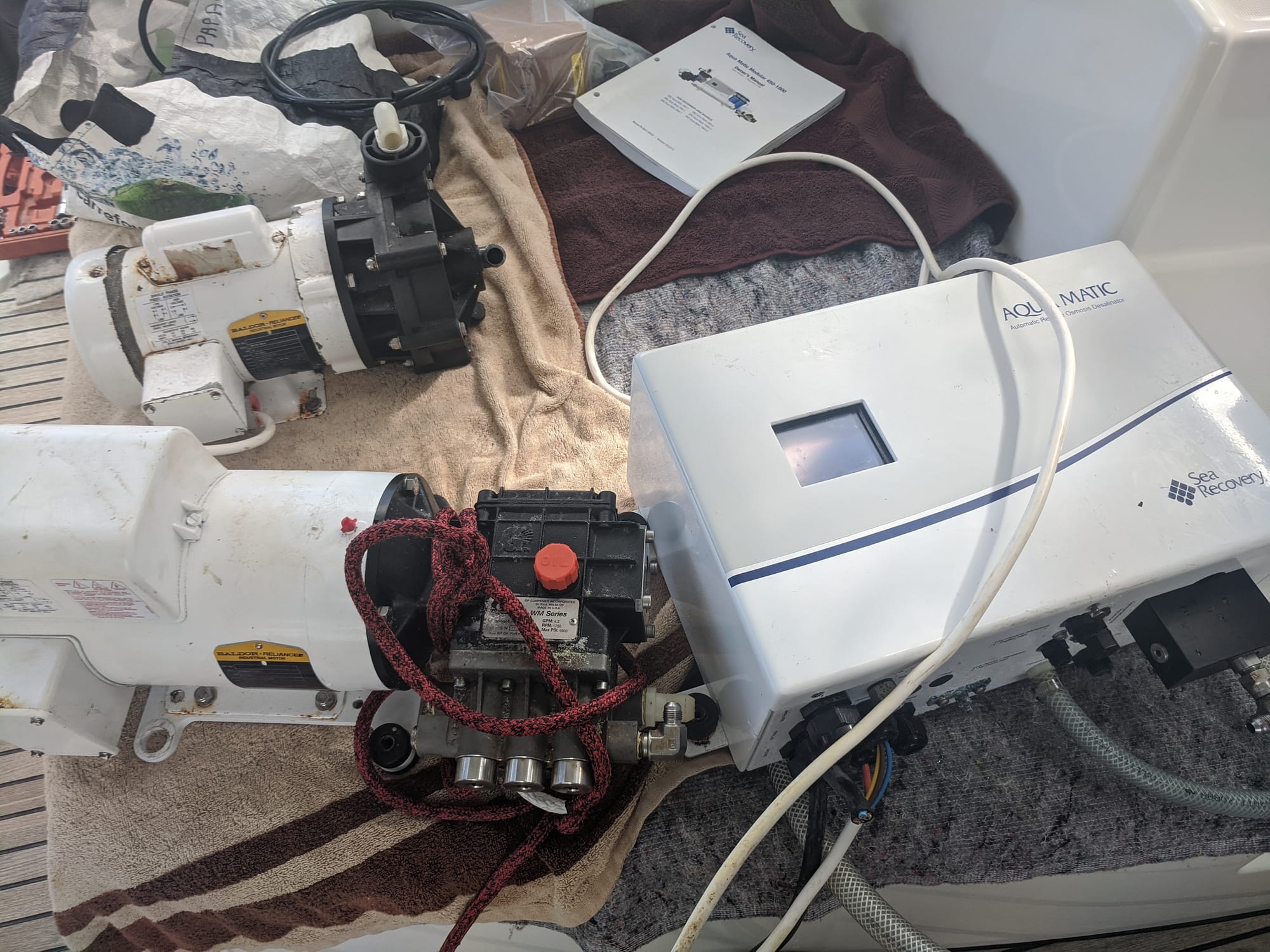
When we started, Sabado carried an Aquamatic Sea Recovery unit that made about 35 gallons an hour. On paper, that's a lovely watermaker, high output, well-built, a serious piece of marine engineering. The catch was that it ran on AC power, which meant it could not make a drop unless the generator was running.
Our generator was a Paguro. And the Paguro failed more than it ran.
We threw money and technicians at it in island after island. Nobody could get it to run right for long. The failure finally became official in Martinique, when the Paguro service center, the factory's own people, told us they were out of ideas.
Here's the thing I want to be clear about: the Sea Recovery watermaker never let us down. The generator did. But when your watermaker is chained to a power source you can't trust, the distinction stops mattering. So we made a decision that, given the situation, I'd make again: we pulled the Sea Recovery unit out entirely and went looking for water we could make without a generator at all.
Chapter Two: The Spectra, our honest mistake
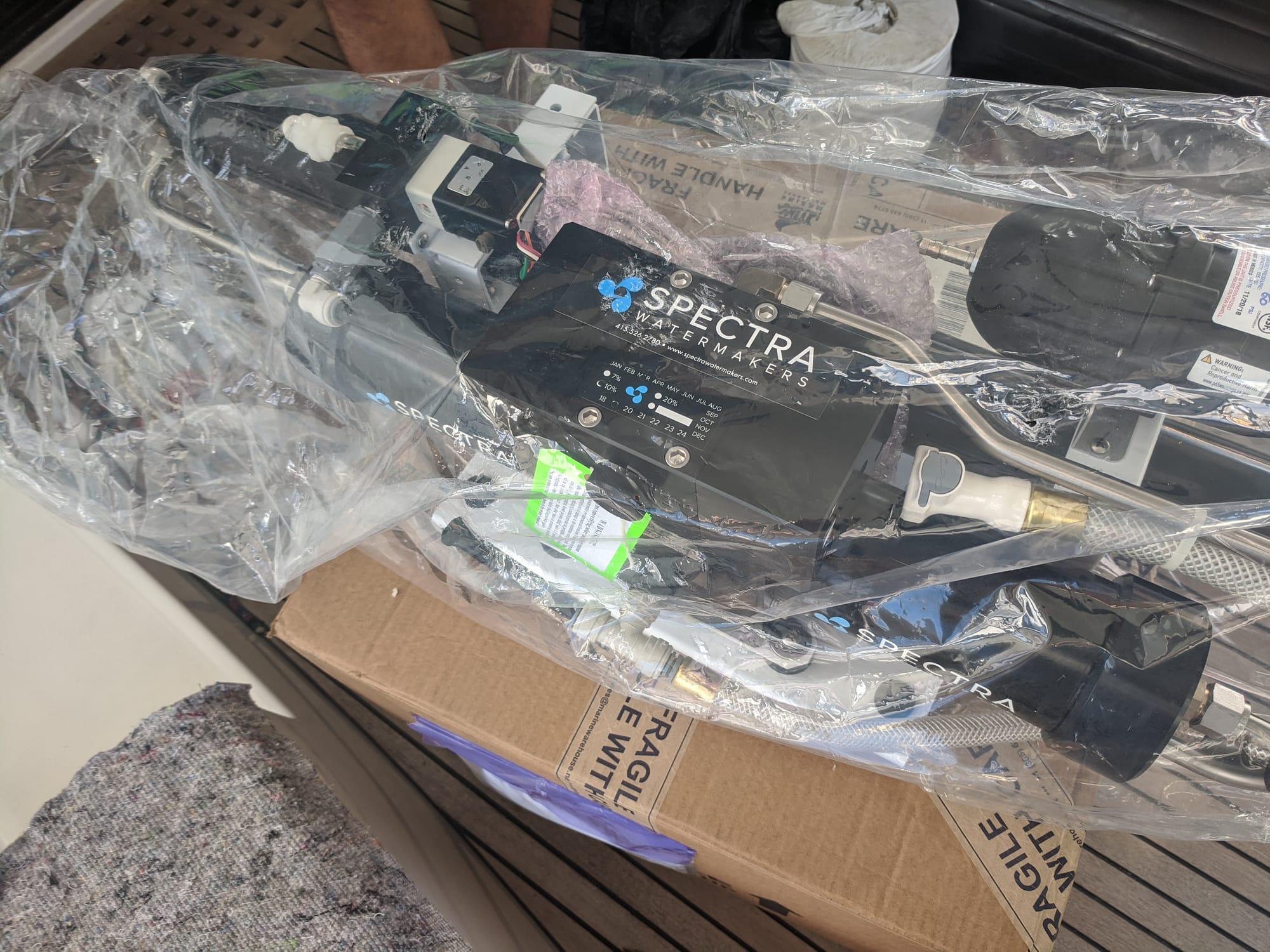
We replaced it with a Spectra that made about 14 gallons an hour and ran on 12 volts.
I want to defend this choice before I criticize it, because at the time it was the right call. We had just been burned badly by generator dependence. The single most attractive quality any watermaker could have, in that moment, was independence from AC power. Spectra's whole reputation is built on energy efficiency, clever engineering that lets you make water off your battery bank without starting up a generator. After the Paguro saga, that was exactly what we were looking for.
And for three years, it mostly worked. The Spectra ran, we made water, we cruised.
But the vulnerability wasn't the running, it was the fixing. When parts failed, they were proprietary Spectra parts, and getting them shipped to the places we cruise ranged from expensive to nearly impossible. The clever engineering that made the unit efficient also made it dependent on a supply chain we couldn't reach. We kept feeding it. The final tally was around four thousand dollars in Spectra parts, and at the end of it, we still had a watermaker that would not make water.
That's the mistake, and I'll own it: we kept investing in a system whose real weakness was structural (or logistics maybe), not mechanical. But I'll also defend the reasoning that got us there. We didn't choose the Spectra because we misjudged it. We chose it because, on the boat we had, with a generator we couldn't trust, DC independence was worth more than anything else. The lesson wasn't "Spectra is bad." The lesson was subtler, and it's the one I'd tattoo on my past self: efficiency doesn't matter if you can't buy the parts. For a couple on a boat with a modest battery bank and no generator, Spectra's efficiency-first design may still be exactly the right answer. And to be clear, the Spectra made a lot of great water for us and allowed years of independence.
Chapter Three: Rainman earns the starting job
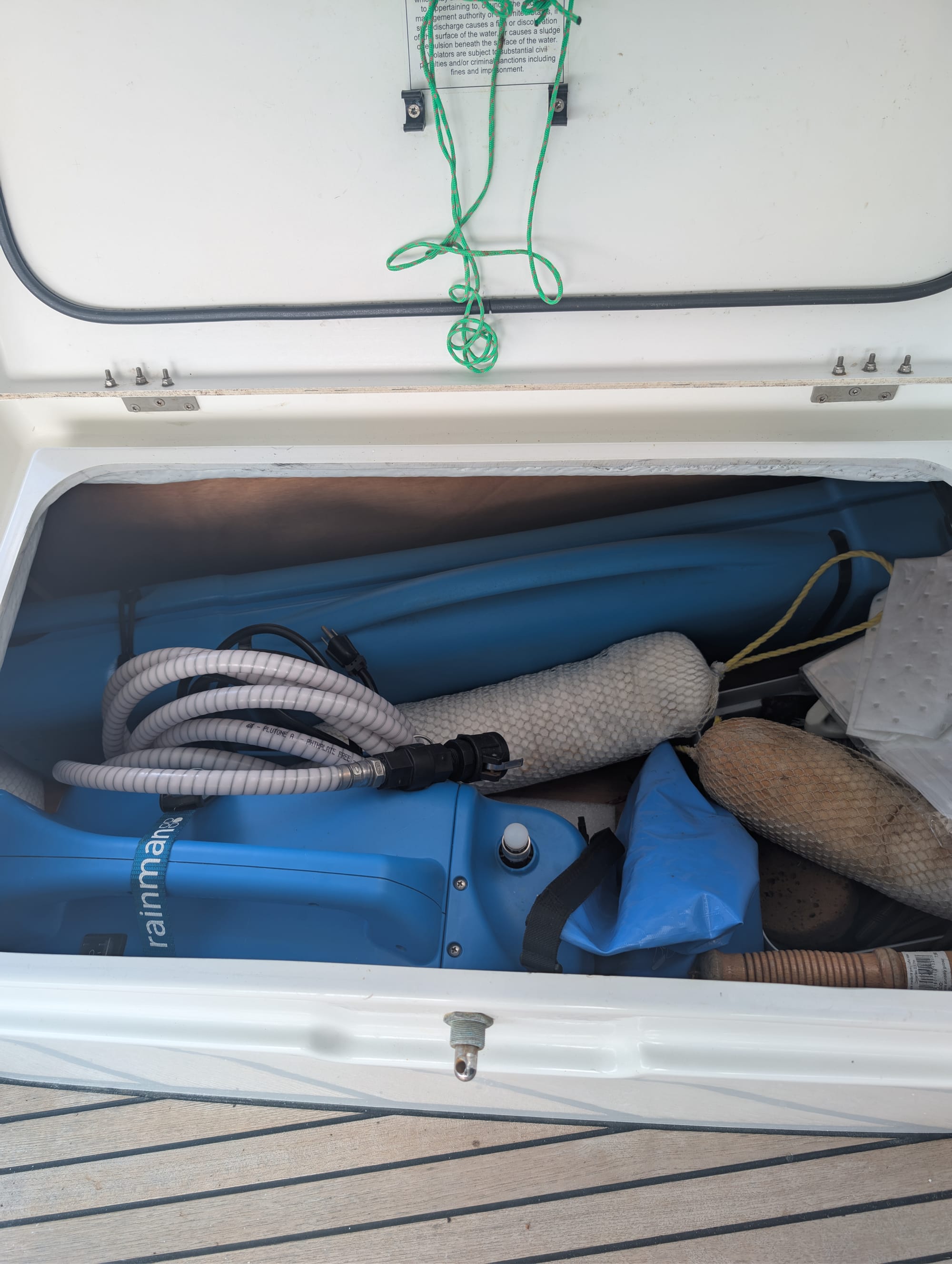
Before crossing the Pacific, we did something that turned out to be the smartest watermaker decision we've made: we bought a backup.
The backup was a “portable”, AC-powered Rainman that makes about 37 gallons an hour. The idea was insurance, something completely independent from the Spectra, so that a failure mid-ocean wouldn't leave us rationing water a thousand miles from anywhere.
What actually happened is that the backup quietly won the job. When we finally gave up on the Spectra, we switched to running the Rainman full time, and it has been genuinely excellent. It is basic in the best sense of the word, a straightforward, robust machine that makes a lot of water, built from standard, serviceable components. And here's the part that closes the whole circle: now that we've built up a large battery bank and serious solar capacity, we can run the Rainman off our own power without a generator at all. (We do finally have a good, reliable generator too but the point is we no longer need it to drink.)
The unit that solved our problem wasn't the most efficient or the most elegant. It was the most serviceable.
The one honest gripe
I promised expertise, and part of expertise is being honest about tradeoffs, so here's our Rainman's real downside:
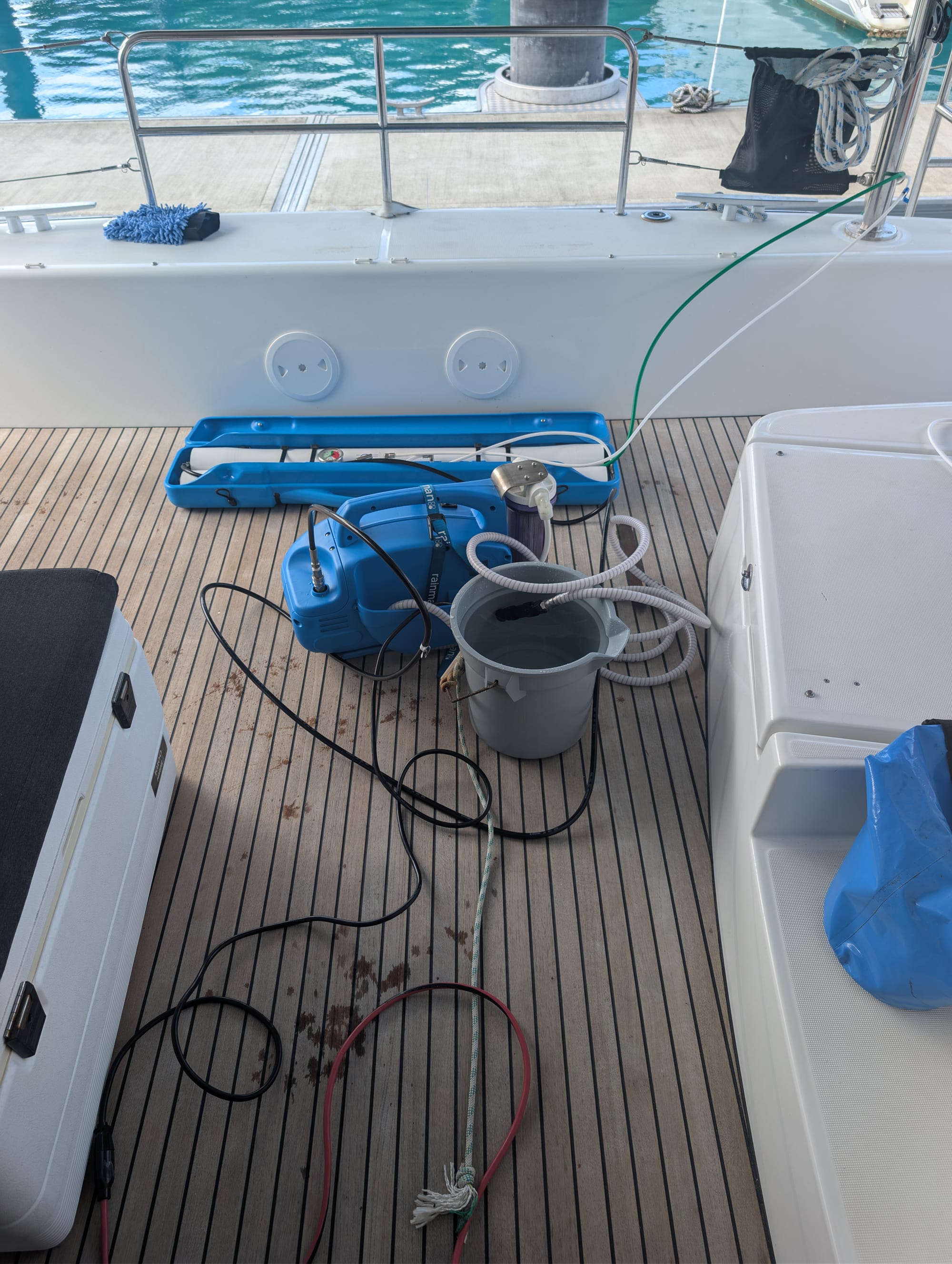
It's a “portable” unit, which means it comes in two pieces, and both of them are heavy and cumbersome. Storing them is a chore. Getting them out is a chore. And because we're not running the watermaker every single day, we have to haul both pieces out and set the whole thing up at least every seven days just to do a fresh water flush. That flush is non-negotiable, skip it and you'll ruin the membrane, so every week, like clockwork, we do the heavy-lifting ritual for a job that takes the machine only a few minutes to perform.
It is the single point of friction in an otherwise outstanding system. And it has a name-brand solution: Rainman makes a permanently framed, installed version of this same watermaker with automatic freshwater flush. Same excellent water-making guts we already trust, mounted and plumbed in, with the one tedious chore we do fifty-two times a year turned into something the system just handles on its own.
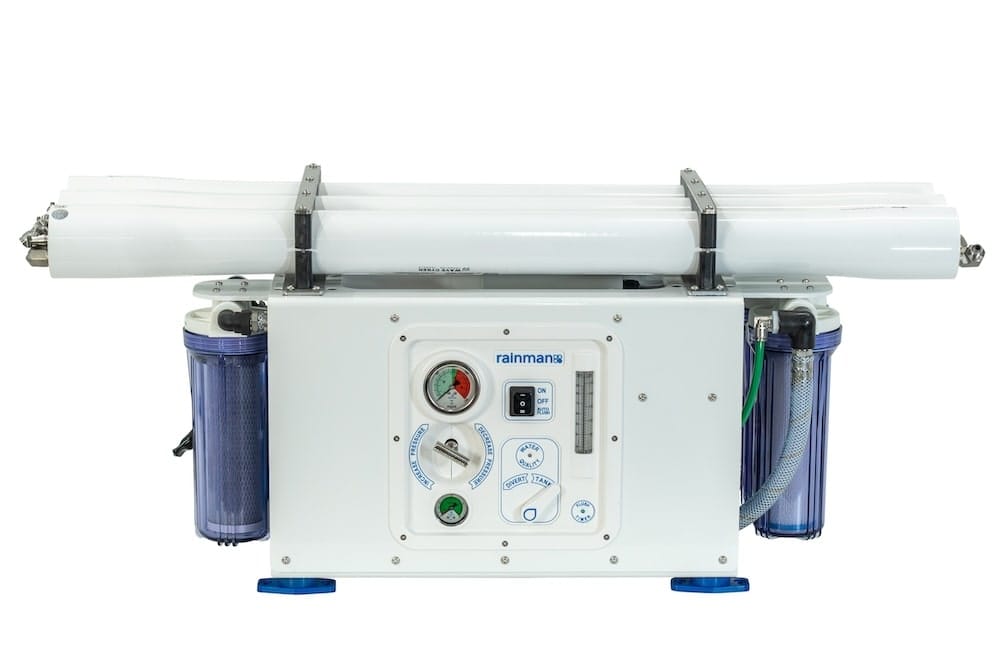
That's our dream unit. I'll say it plainly: if there's a watermaker upgrade on our wishlist, it's that one.
What we'd tell our past selves
If you're choosing a watermaker, here's the distilled version of everything three units and two oceans taught us:
Choose around your power reality, not the spec sheet. Gallons per hour is the number everyone shops on and it's the least important one. Ask first what's going to power this thing, and how much you trust that power source, because that decision drives everything else.
Choose around your parts reality. Wherever you actually cruise, ask how you'd get a failed component replaced. Standard, serviceable parts beat clever, efficient engineering every single time you're far from a dealer which, if you're cruising remote, is most of the time.
Value flushing you'll actually do. The best flush routine is the one that's easy enough that you never skip it. If a design makes maintenance a heavy weekly chore, factor that in honestly, it's the difference between a membrane that lasts years and one that fouls in a season.
None of our choices were foolish for the boat we had at the time. But knowing what we know now, we'd have weighted serviceability far higher, and efficiency far lower, from the very beginning.
Where we are now
Sabado today has a big battery bank, plenty of solar, a generator we finally trust, and a Rainman that just works. We make all the water we need off our own power, anywhere we drop the hook. After the Paguro and the Spectra years, "it just works" is a small miracle we don't take for granted.
There's one upgrade left on the dream list: that framed, auto-flushing Rainman that would erase that weekly flush chore. Until then, we'll keep hauling out both heavy halves every seven days, doing the flush, and being quietly grateful that the hardest system on the boat finally became the one we worry about least.
What’s powering your watermaker, and would you make the same choice again? We especially want to hear from anyone running a framed, auto-flush Rainman, tell us about your experience.