After an accident onboard, Holly went to the hospital in Fiji, and I learned something about myself that I didn't like.
I've been captaining boats for many years. I know the theory. I know what a MAYDAY call sounds like, I know where every piece of distress gear on this boat lives, and I could recite the whole thing to you over a coffee at any anchorage we meet. None of that was available to me in the moment. What I actually had was a pounding heart, an injured wife, and a brain that had gone completely blank.
That's the part nobody tells you. The knowledge doesn't disappear because you never had it. It disappears because your body dumps a load of adrenaline into your system and takes your ability to think straight with it.
So we built something for that moment. It’s called Overboard, it works with no signal at all, and it’s free for anyone who wants it. If you want the full story of what happened in Fiji and what it taught us, we wrote that up here.
What it does
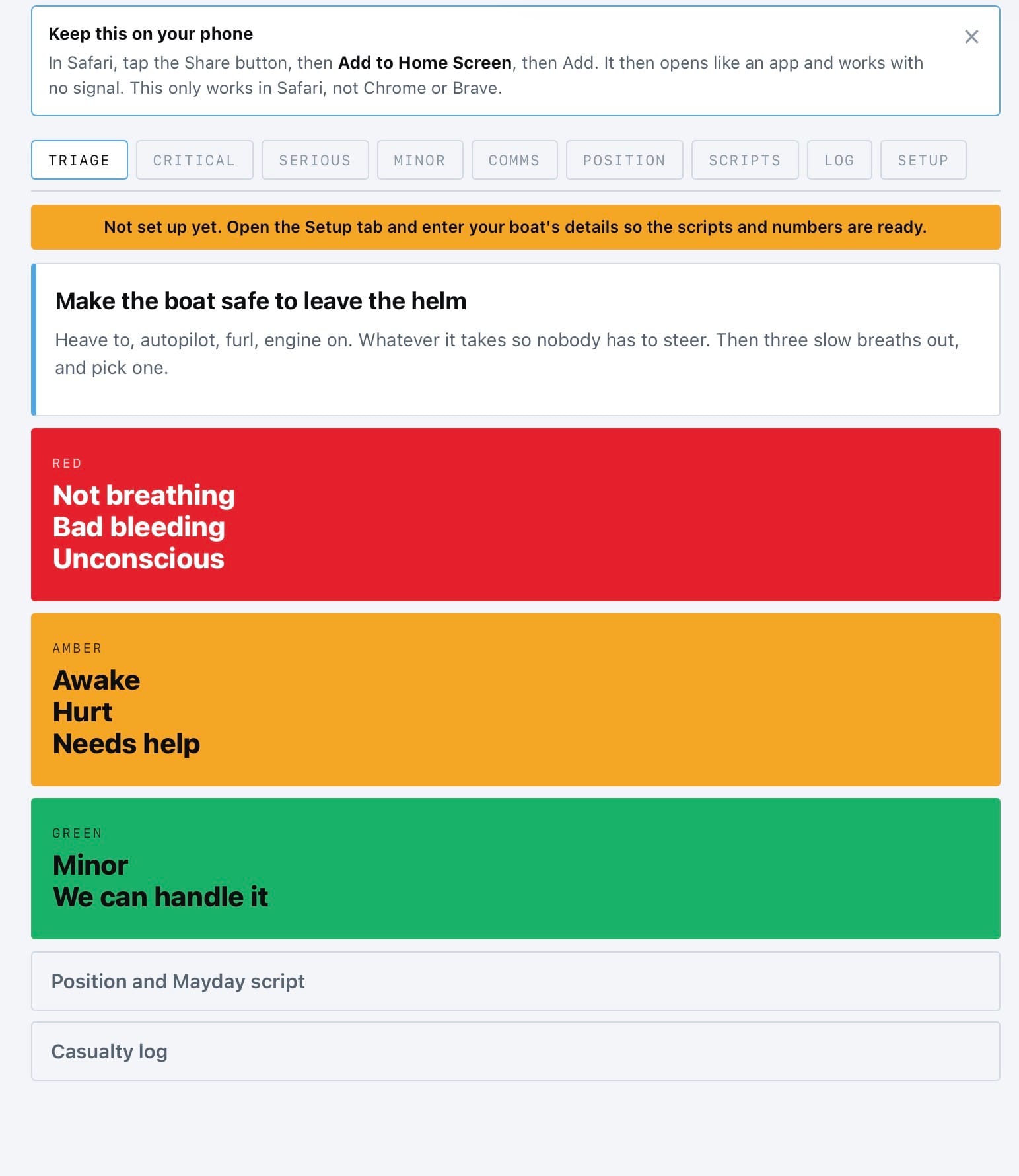
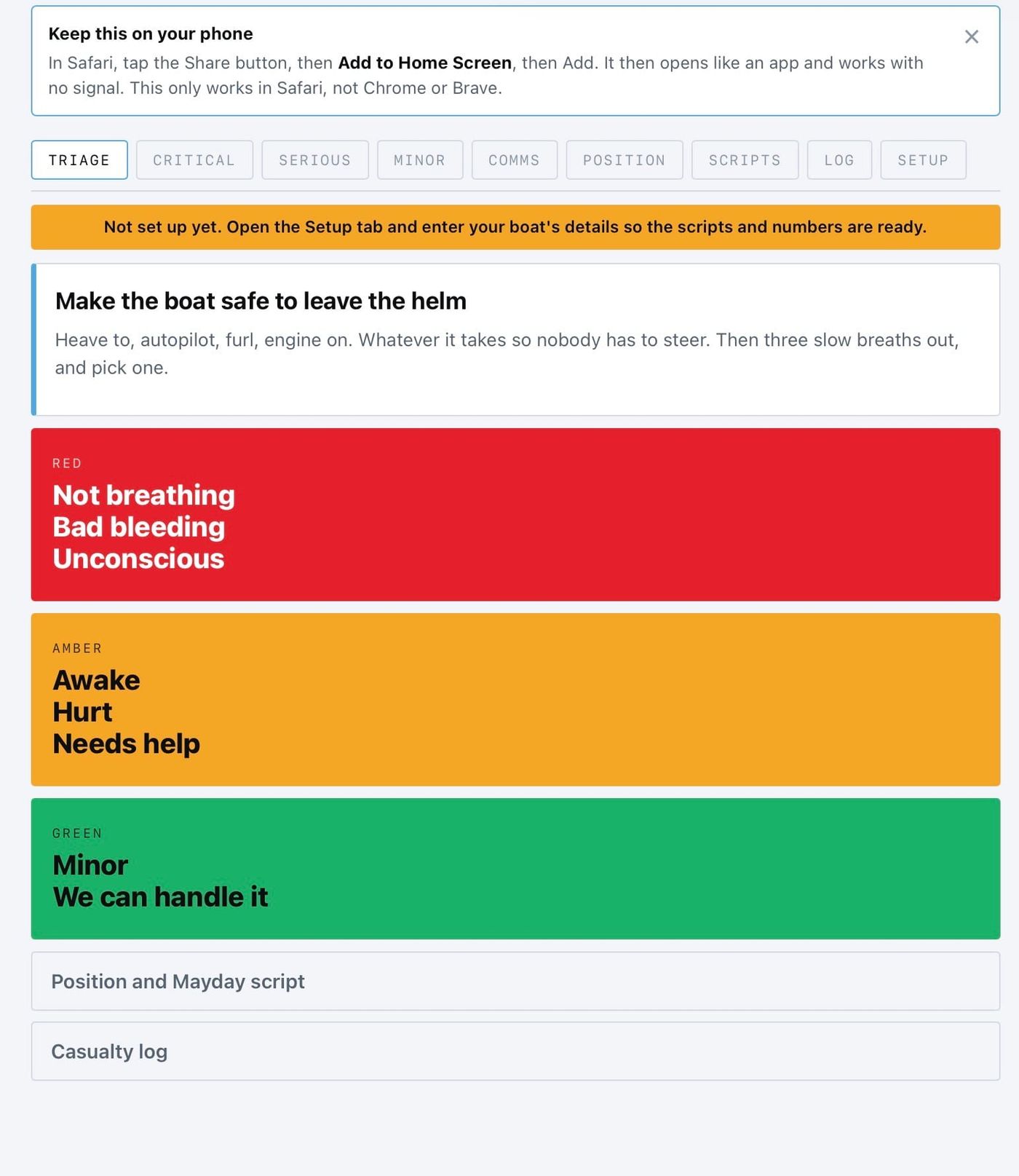
Overboard opens on one screen with three buttons, because three buttons is about the limit of what I could have handled at the time.
Before those buttons, there's one line reminding you to make the boat safe to leave the helm. Heave to, autopilot, furl, engine on, whatever it takes so nobody has to steer. Then three slow breaths out. Then you pick one:
- Red. Not breathing, bad bleeding, unconscious.
- Amber. Awake, hurt, needs help.
- Green. Minor, we can handle it.
Each one opens a short list of what to do next, in order, in plain language. The red path starts with stopping the bleeding, not with reaching for a device, because that's the actual order of operations and it's the one people get backwards when they panic.
Past that, there are a few things I wish I'd had in my hand that day:
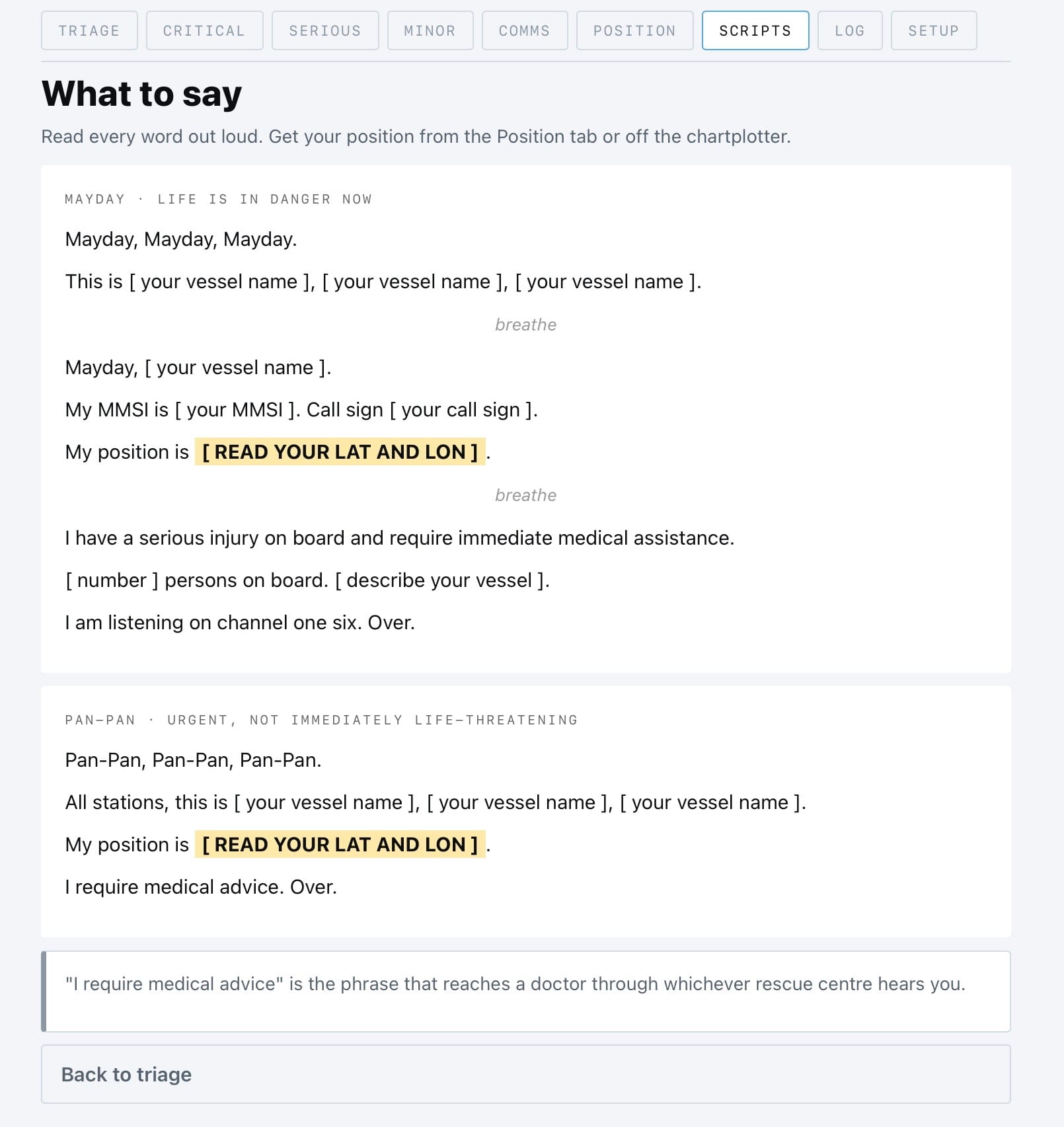
A MAYDAY script you read out loud. Not a summary of how a distress call works. The actual words, in order, with your vessel name, call sign, and MMSI already filled in and your current position pulled from your phone's GPS. There's a PAN-PAN version too, for urgent but not immediately life-threatening, which is the call more cruisers should be making and don't.
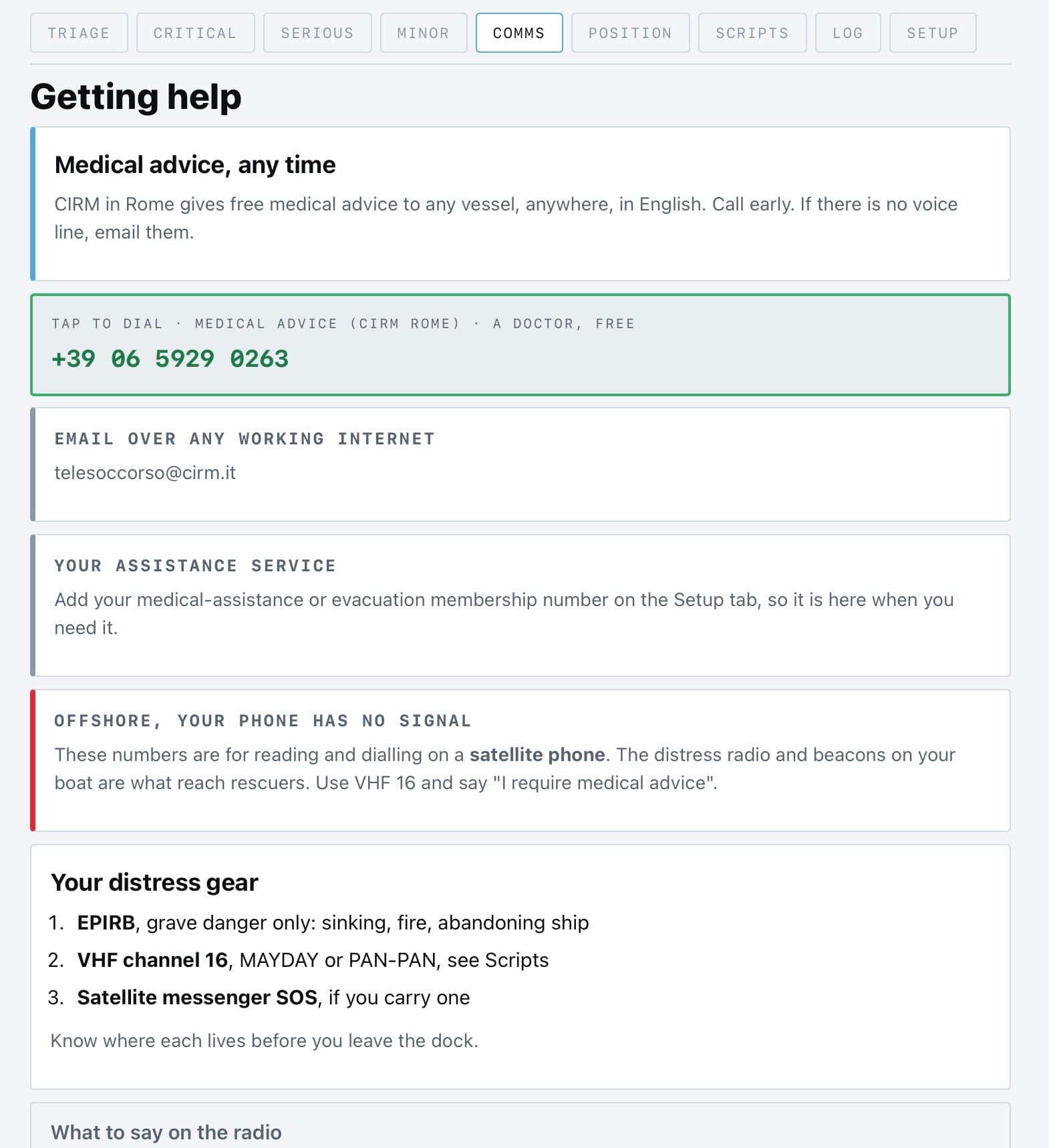
Free medical advice, on speed dial. CIRM in Rome gives free medical advice to any vessel, anywhere, in English. I sailed for decades without knowing that service existed. It's built in, along with the reminder that if you have no voice line, you can email them, and if you have neither, VHF 16 and the words "I require medical advice" will reach a doctor through whichever rescue center hears you.
Your position, in the formats you'll actually be asked for. No fumbling around with a chartplotter while somebody is bleeding.
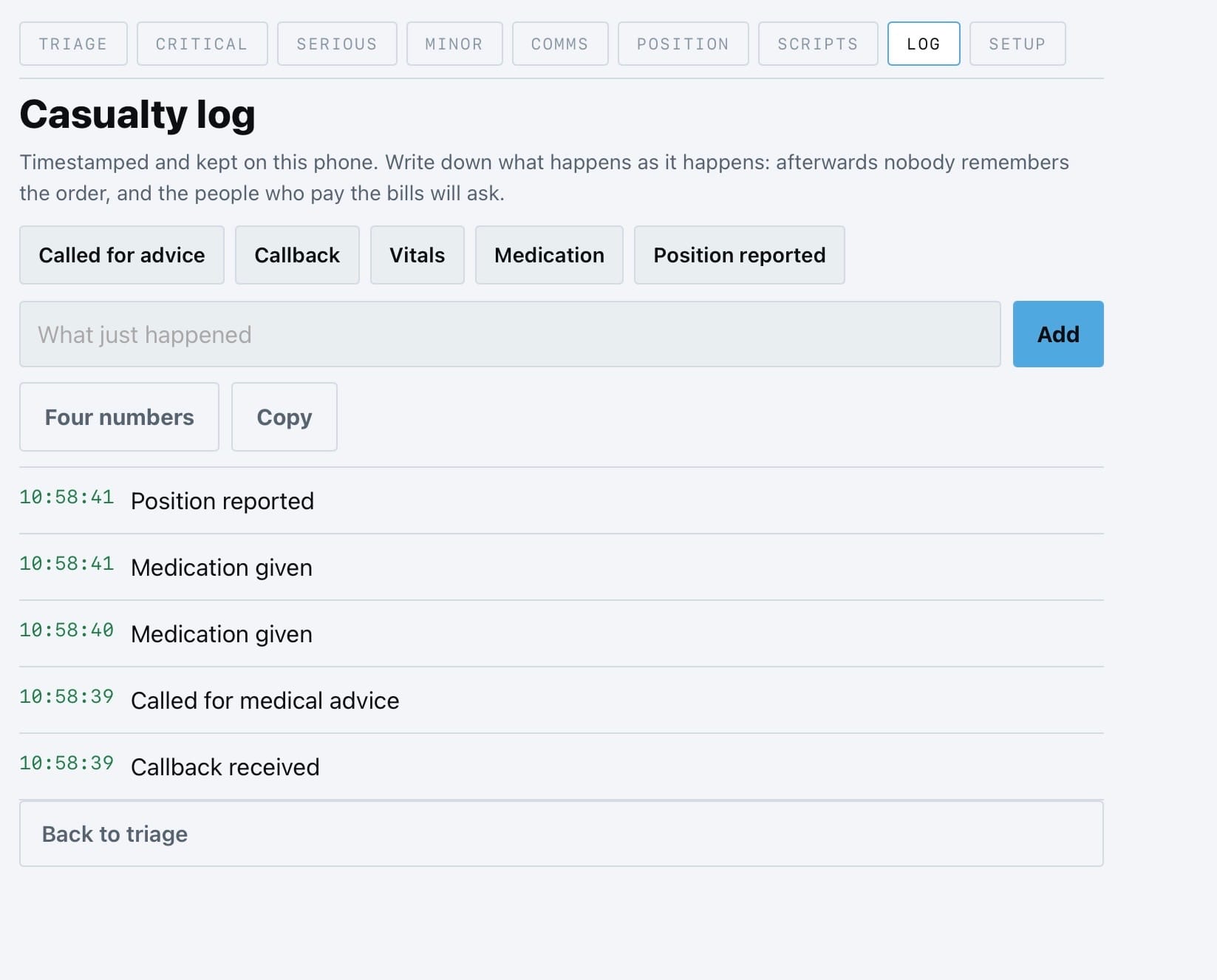
A casualty log. Timestamped notes on what happened and how the patient is doing. It matters more than you'd think when you finally do reach a doctor, and adrenaline is terrible for memory. It is likely your insurance will want the play by play, too.
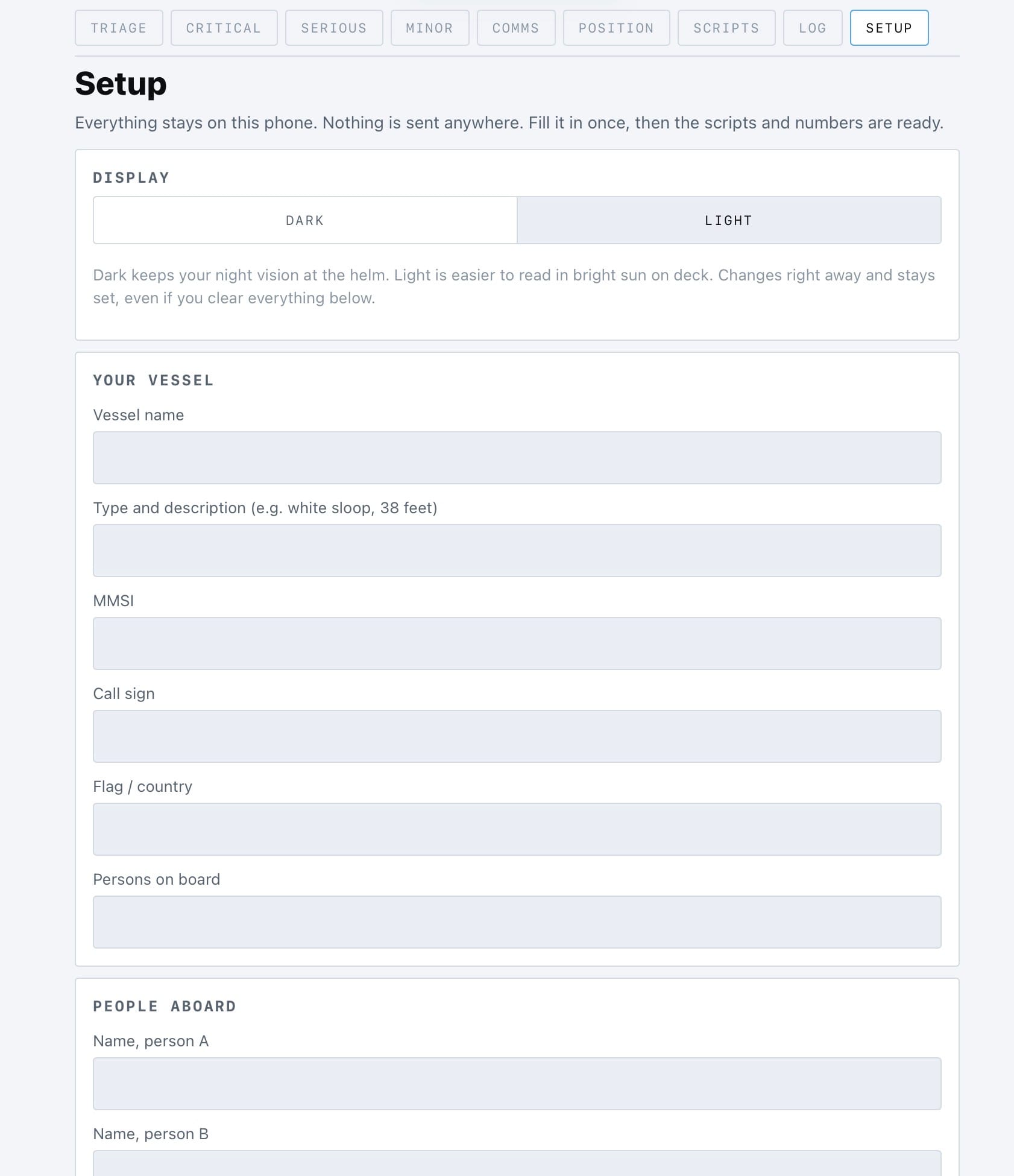
A setup screen you fill in once. Vessel details, people on board, your assistance or evacuation membership number. Then it's there when you need it.
The offline part is the whole point
An emergency app that needs an internet connection isn’t great for our lifestyle.
Think about when you'd actually reach for this. You're offshore. Or you're in a remote anchorage. Or Starlink is doing what Starlink does. The exact conditions that create a marine emergency are the conditions that take your connection away.
So Overboard installs itself onto your phone. You open it once with a connection, and after that it works with the phone in airplane mode, in a locker, in a liferaft. There's no login, no account, and no signup.
It also never sends your information anywhere. Your vessel details and crew information stay on your phone, full stop. There's no server collecting it, because there's no server. That was a requirement for us and it should be for you too.
Put it on your phone before you need it
This part matters. Bookmarking it isn't enough, because a bookmark needs a connection. You have to add it to your home screen, which is what tells your phone to keep a copy.
On iPhone: open emergency.svsabado.com in Safari. It has to be Safari, not Chrome or Brave. Tap the Share button, then Add to Home Screen, then Add.
On Android: open the link in any browser, then use the browser menu and tap Install app or Add to Home screen.
Then do the test I want you to do: turn on airplane mode and open it from the new icon. It should come straight up. Now you know it works, and you know it before the day you need it.
Fill in the setup screen right away while you're relaxed and the internet works. It takes two minutes, and it means the MAYDAY script is already reading your boat's name back to you when it counts.
What this is not
It's not a replacement for medical training. Take a first aid course or better a wilderness medical class. If you're heading offshore, take a proper offshore medical course.
It's not a replacement for your EPIRB, your PLB, or your radio. The app tells you what to say. Your beacons and your radio are what actually reach rescuers.
And it's not medical advice. It's a set of checklists to keep a rattled person moving in the right order until you get a real doctor on the line.
It's free, and we'd like you to share it
We're not charging for this, we're not gating it behind a signup, and there's nothing to buy. If it gets used once, on somebody else's boat, by somebody we've never met, that's the whole return we're after.
So please pass it along. Send it to your buddy boat. Drop it in your rally's WhatsApp group. Share it with your yacht club or your marina. If you run a cruising net, mention it.
Fill it in tonight. Then hopefully never open it again. :)