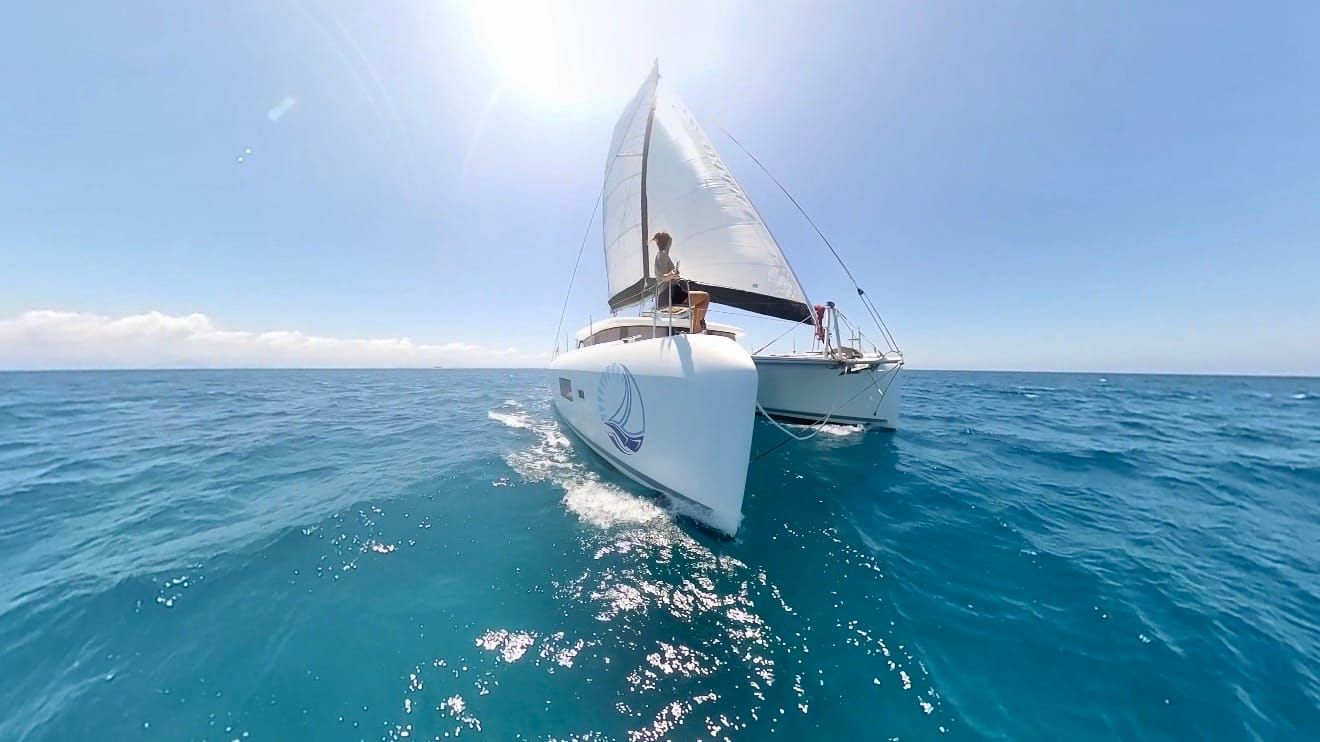
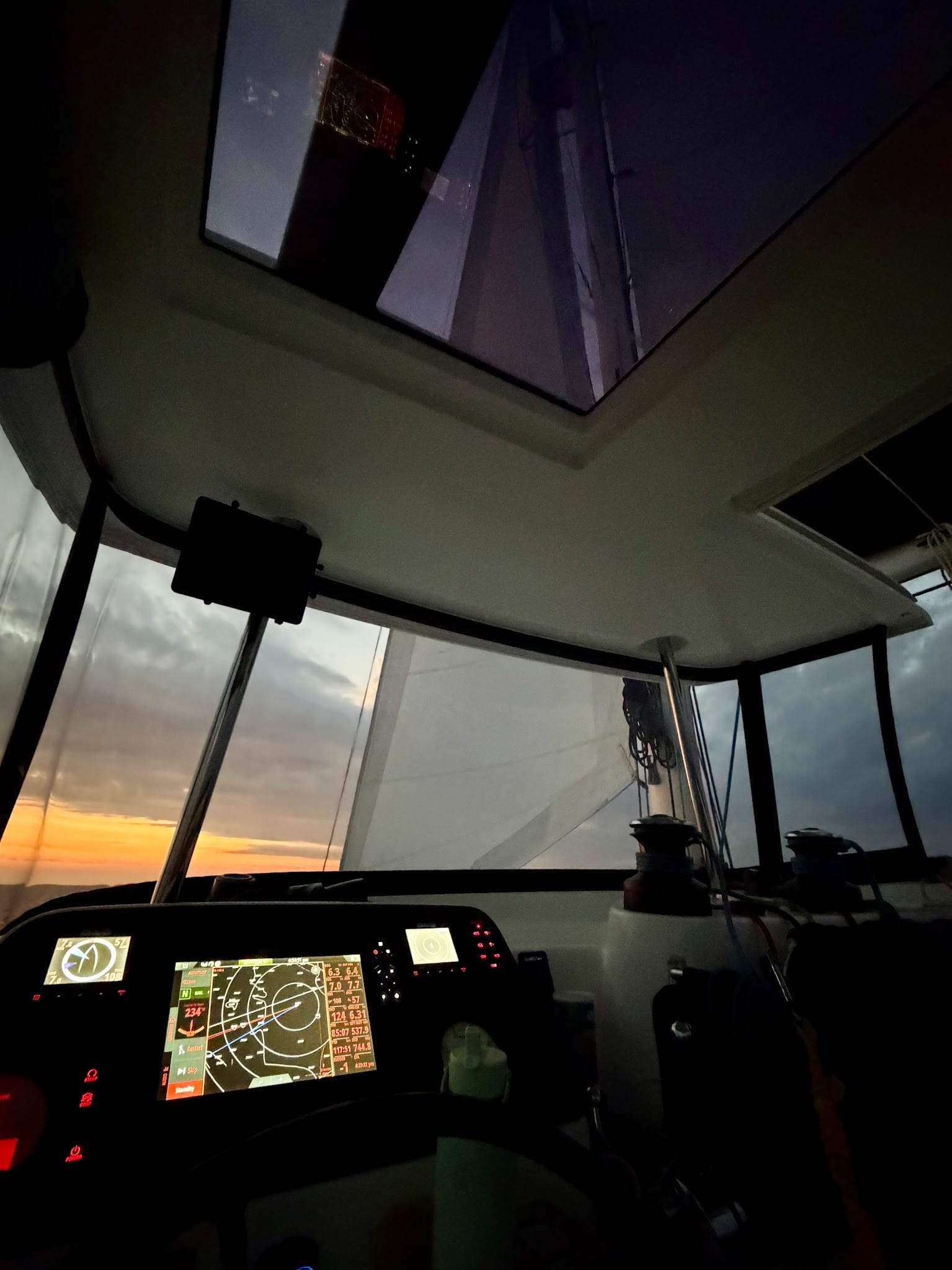
We ditched our mooring ball around 9am. We weren’t in a rush to depart. New Caledonia has surprised us, with tons of beautiful anchorages, clean air and clear water. Plus, there are French bakeries on every corner, and the check-in/check-out process is free of charge. We’re thinking about coming back next year. There seems to be a lot of good cruising to do here!
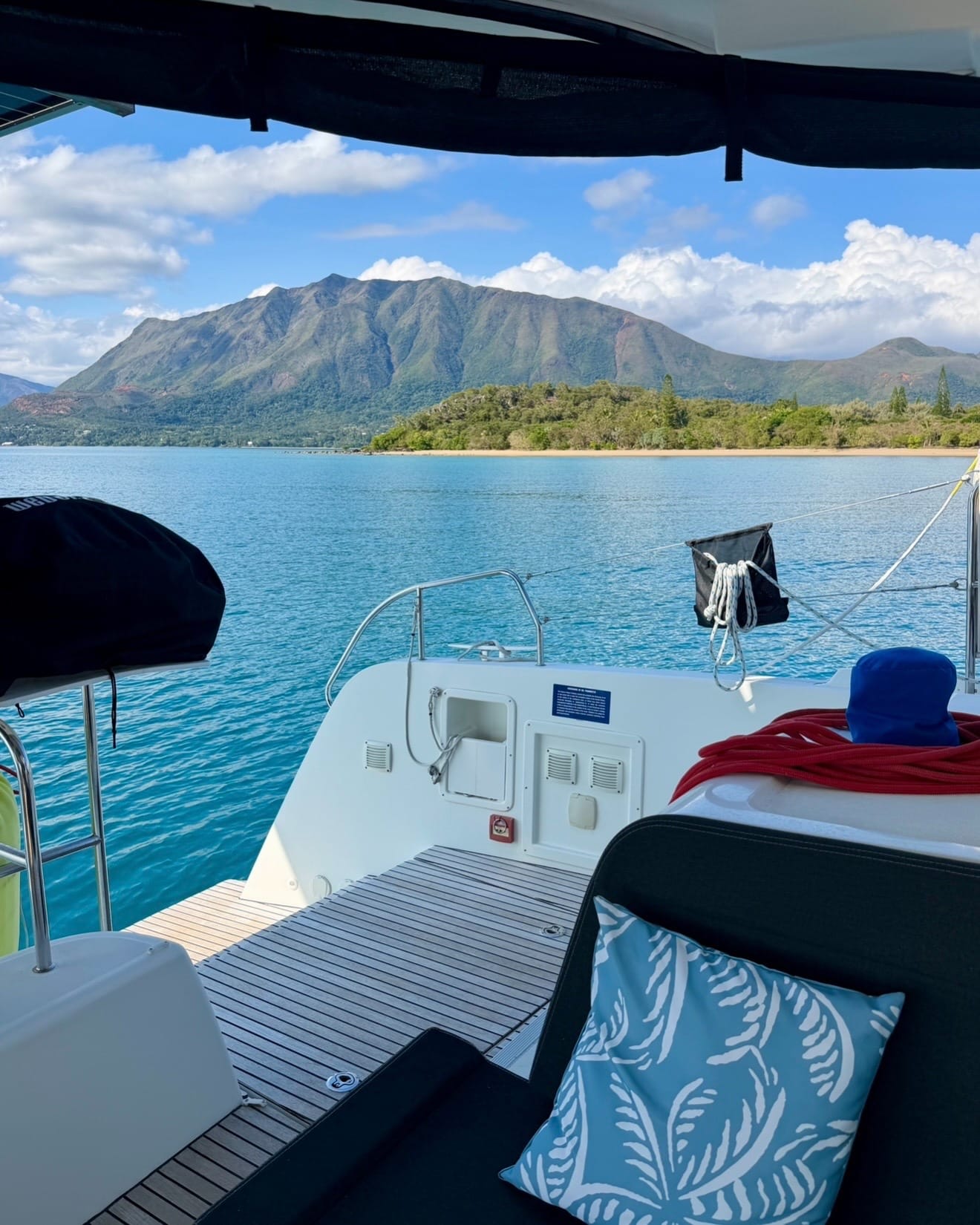
We had hoisted the sails and shut the engine off by 10am. Conditions were dreamy, with around 12kn of wind and flat seas. We were sailing at 6kn and grinning from ear to ear. Our house batteries hit 100%, and I took advantage of the calm sea state to bake some burger buns that I’d use for dinner later. We exited the pass, and even without the protection of the reef, the sea state was nice and calm.
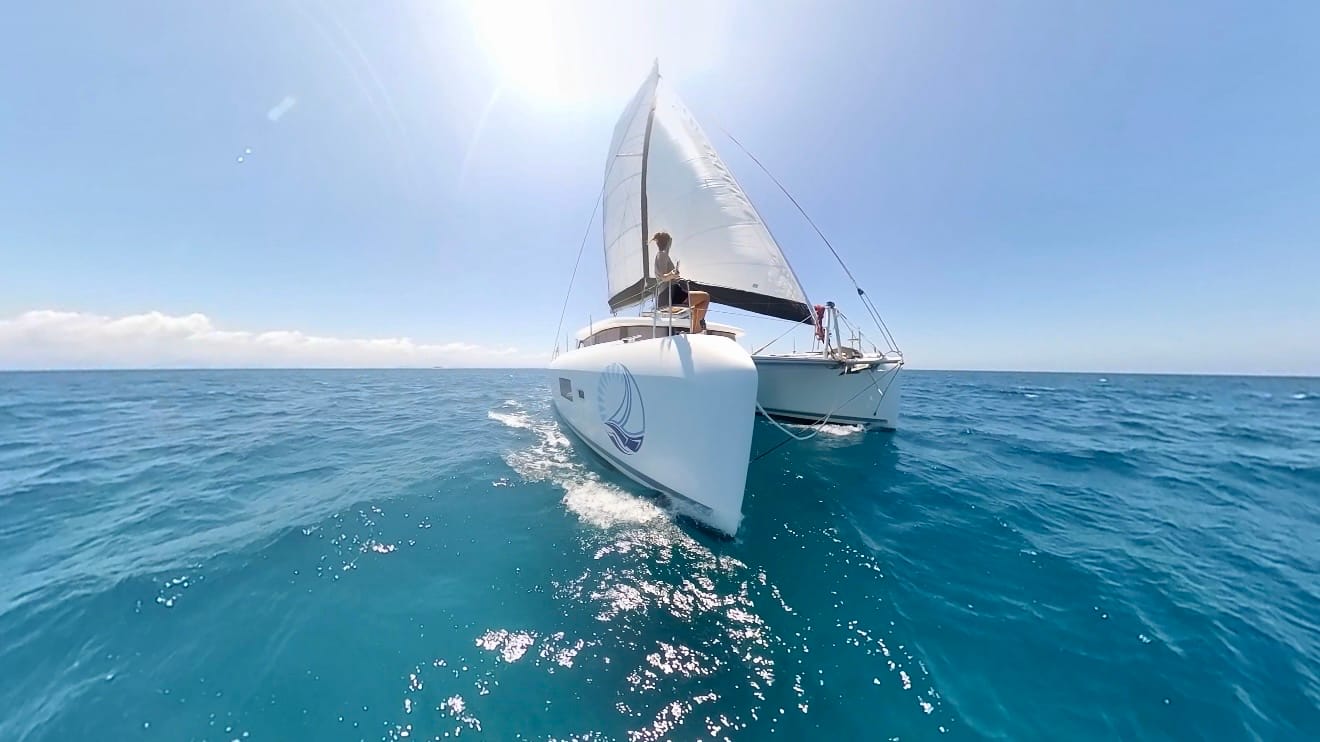
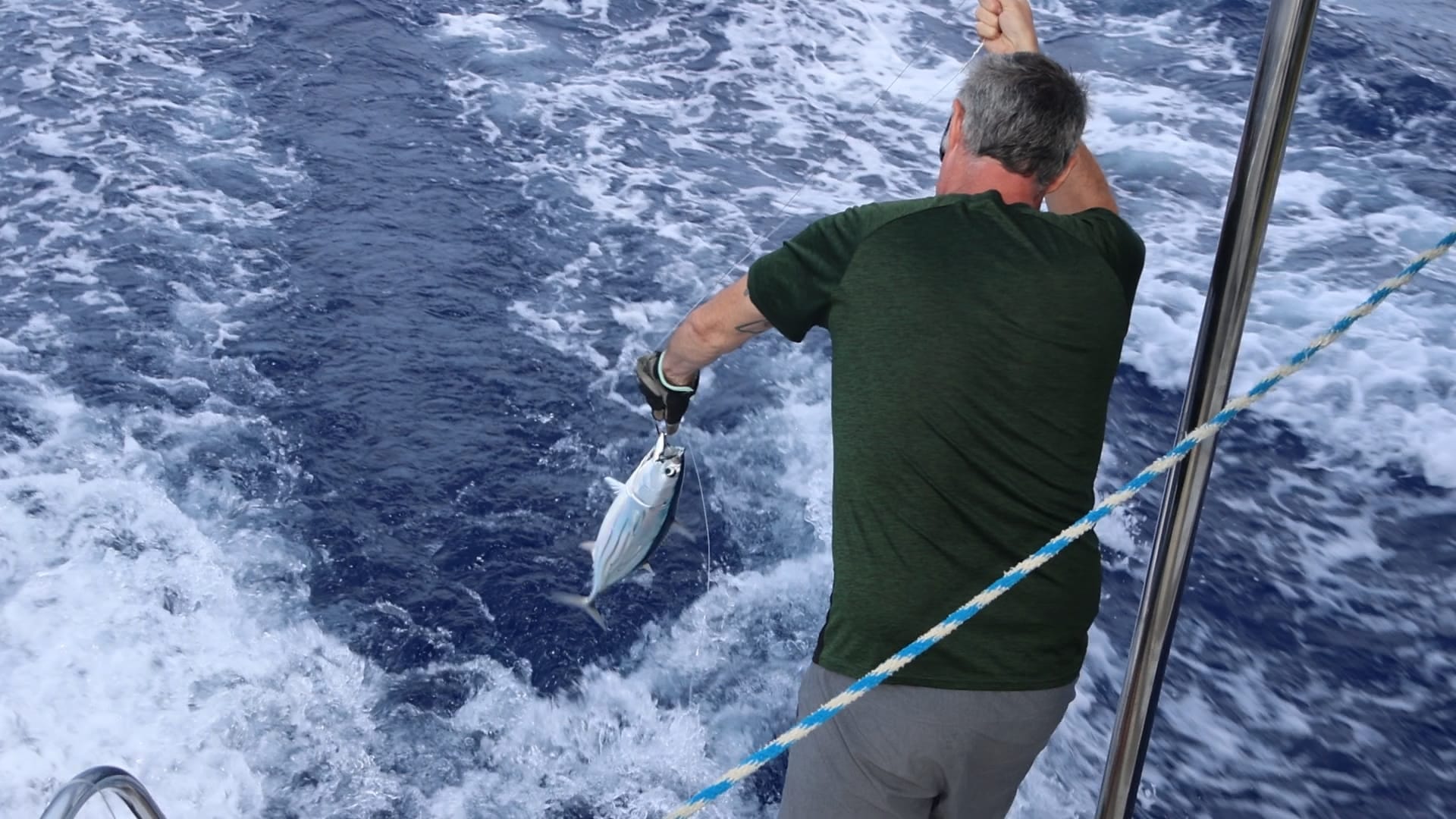
We continued sailing for a few hours before turning on an engine. There was a thunderstorm creeping up on us from behind, and with the additional 1 to 1.5kn of speed from the engine, we were hoping to stay ahead of it. We took turns keeping watch at the helm and caught and released a small bonito tuna shortly after putting out our handlines. If the fishing deities are taking orders, we’d love a yellowfin, mahi or wahoo on this trip!
Despite having only 12kn of wind, we decided to reef the mainsail before dinner. We could see the storm growing behind us, and although we were a ways ahead of it thanks to Ray’s early decision to use an engine, we wanted to be prepared in case it caught up to us. We chose to err on the side of caution, even if it costs us diesel.
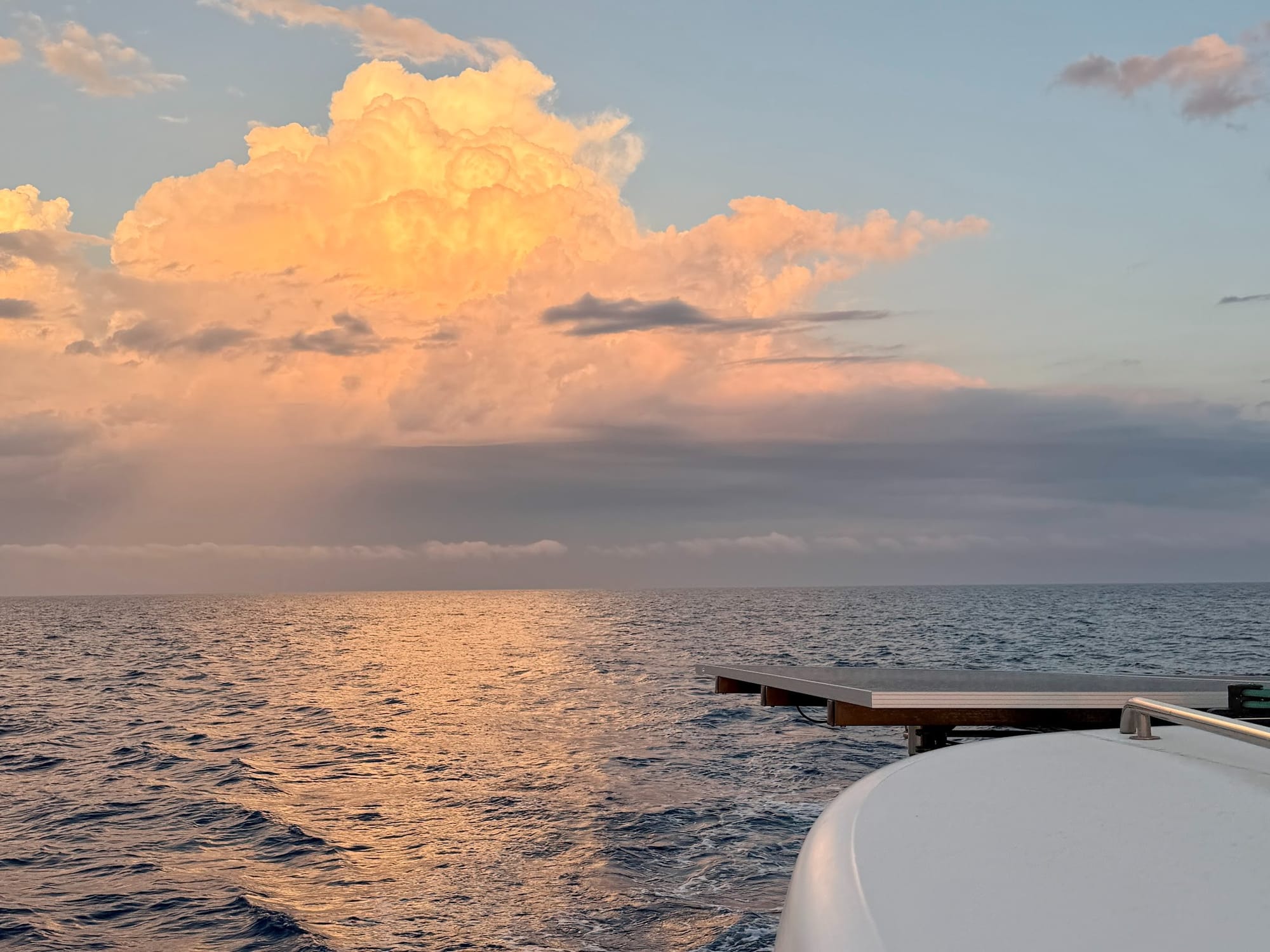
We inhaled some cheeseburgers and fruit salad for dinner, and sure enough, we saw the clouds behind us start flickering. The wind dropped to 2kn, so we took the sails down and motored straight towards our destination. Lightning on a boat is a big worry. It can fry vital equipment like our GPS and VHF, trigger fires or even breach the hull and cause a vessel to take on water. I kept my head on a swivel at the helm, tracking each flash and trying to judge the distance. Every one seemed pretty far away. All flashes, no bolts. After an hour or so, the squall seemed to break up and move away from us.
The clouds cleared, revealing thousands of stars, and chunky green bioluminescence sparkled around the boat. It was so calm that I could see the glow when a fish swam close to the surface. It reminded me of an interview I saw recently, in which a survivor recounted the story of four college students aboard a 17ft Hobie Cat when a sudden storm flipped the boat off Daytona Beach. They were in the water, clinging to the hull overnight, and noticed that the bioluminescence around their legs as they tread water was attracting sharks. One of the students was attacked and did not survive, while another was hospitalized after being stung by multiple Portuguese man o’ war jellyfish.
Anyway, these are the types of things that keep me awake on night watch shifts.
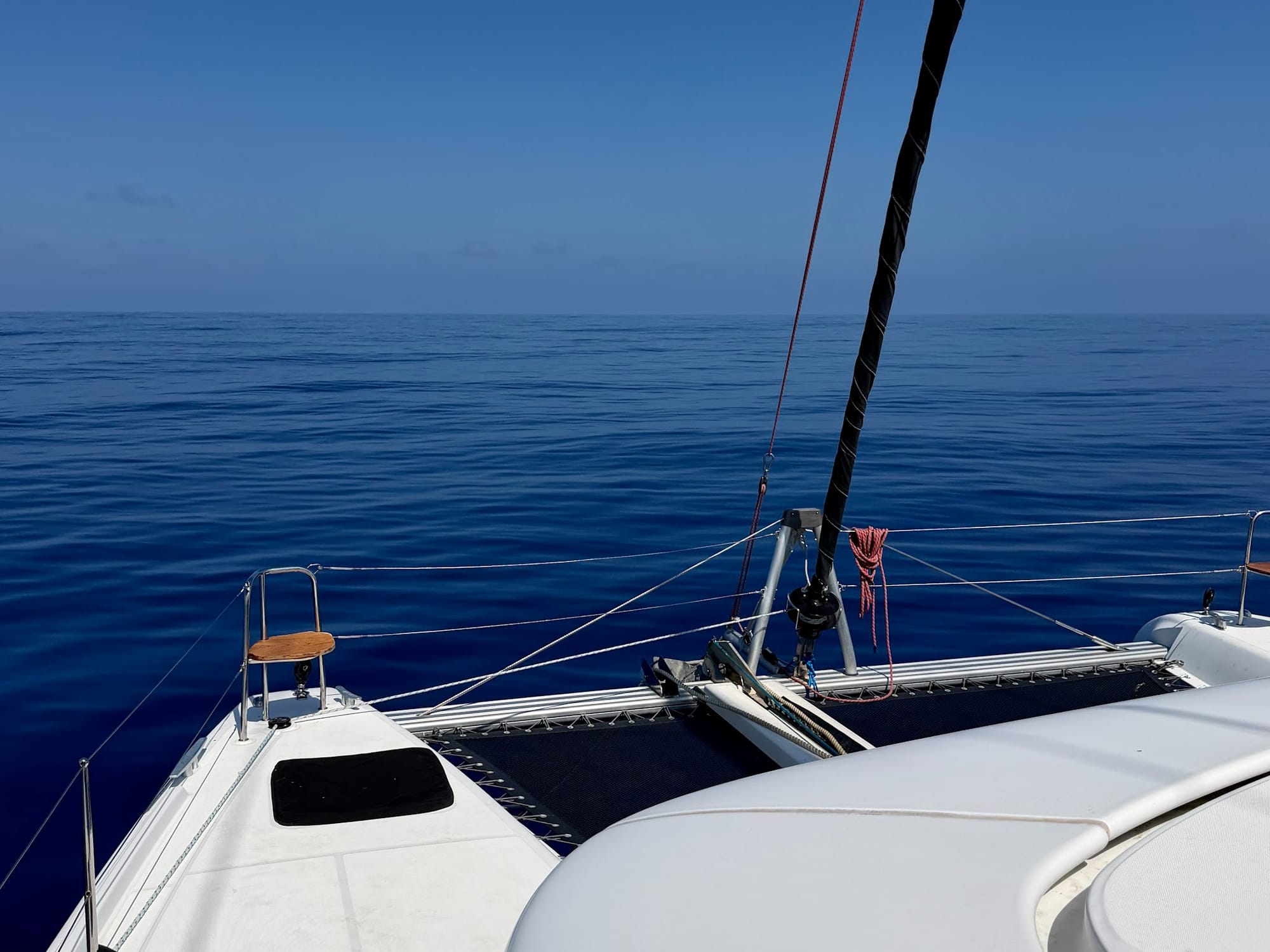
The sun rose on Day 2, reflecting off the glassy water. There wasn’t a cloud in the sky. It was warm. Aside from a few short day sails in Fiji, I don’t remember the last time I didn’t need a sweater on passage. I’ve been cold since Tonga, really! I got a bit of work done on my iPad while I sat at the helm, with seemingly endless visibility and nothing but ocean on the horizon. We had 3kn of wind and were running one engine at 2200 RPM. Ray had already put out the fishing lines.
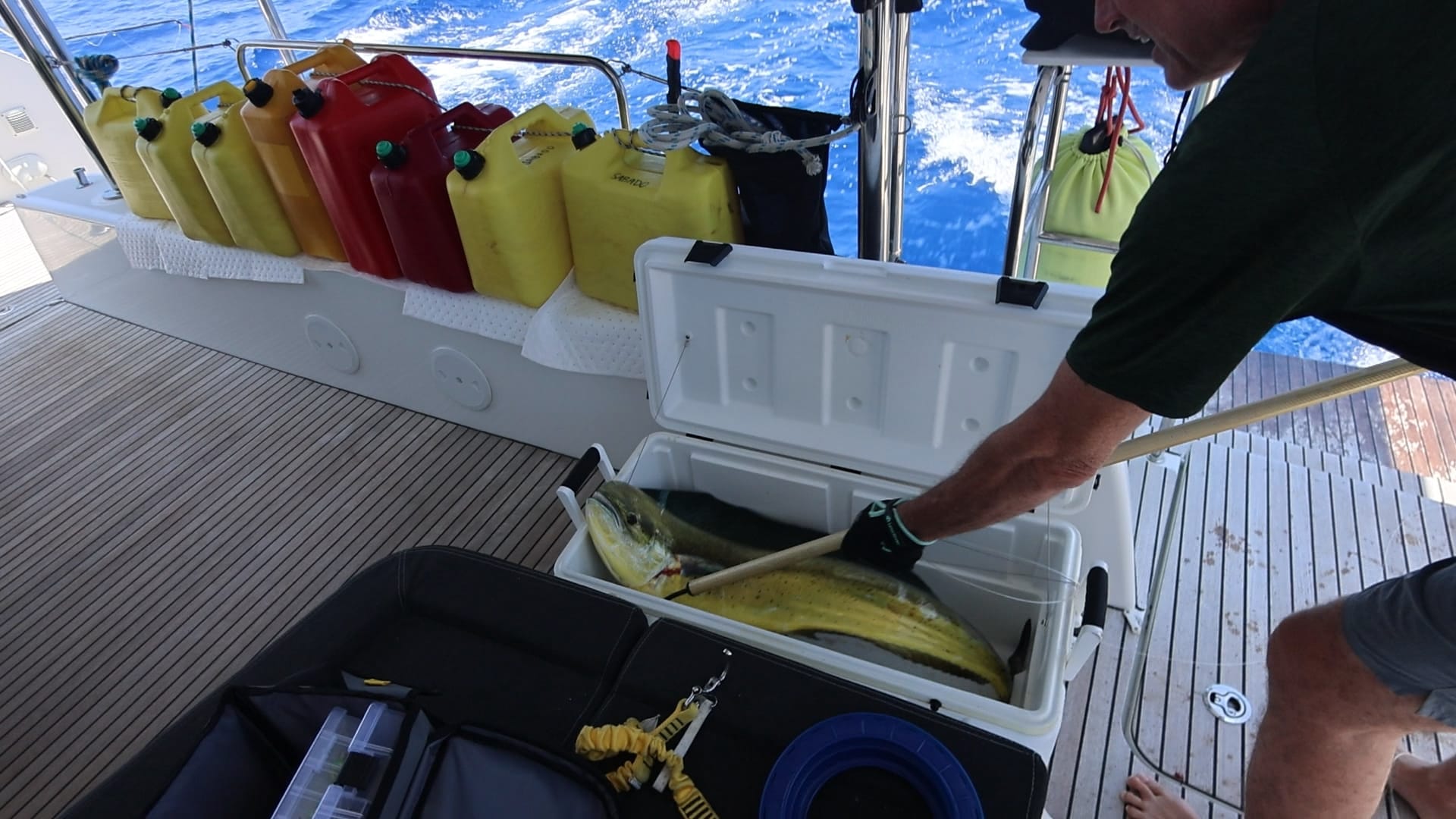
I slept from 9am to 12pm, then made us some lunch. As I sat down in the cockpit to eat, I noticed some hard tugs on the port-side handline. We had another fish on! This one felt bigger than the last, so I emptied out the cooler we use for storage and seating in the cockpit. We’ve been talking about trying to use the cooler to contain the mess a bit after one particularly lively catch on the way to Fiji splattered blood everywhere. I even remember scrubbing some of it off the ceiling in the cockpit.
Ray pulled in a beautiful mahi-mahi and gaffed it just in time. It looked like it had spat the hook right out! He plopped it into the cooler and dealt with the messy part. I’ll spare you the gory details. Then we slid the cooler over to the starboard sugar scoop (where the hose is) to do the filleting. Cleaning out the cooler was much easier than scrubbing all the teak, surrounding gelcoat and cushions. I think this was our cleanest catch yet!
I improvised dinner, grilling the mahi fillets and topping them with a delicious sauce of coconut milk, lime, ginger and cilantro. We ate it with veggies over rice, and it was wonderful. I’ll remake it and write up the recipe soon. The wind jumped up to 7kn, so we decided to motor sail for a while. We settled in for another night of sleeping in shifts.
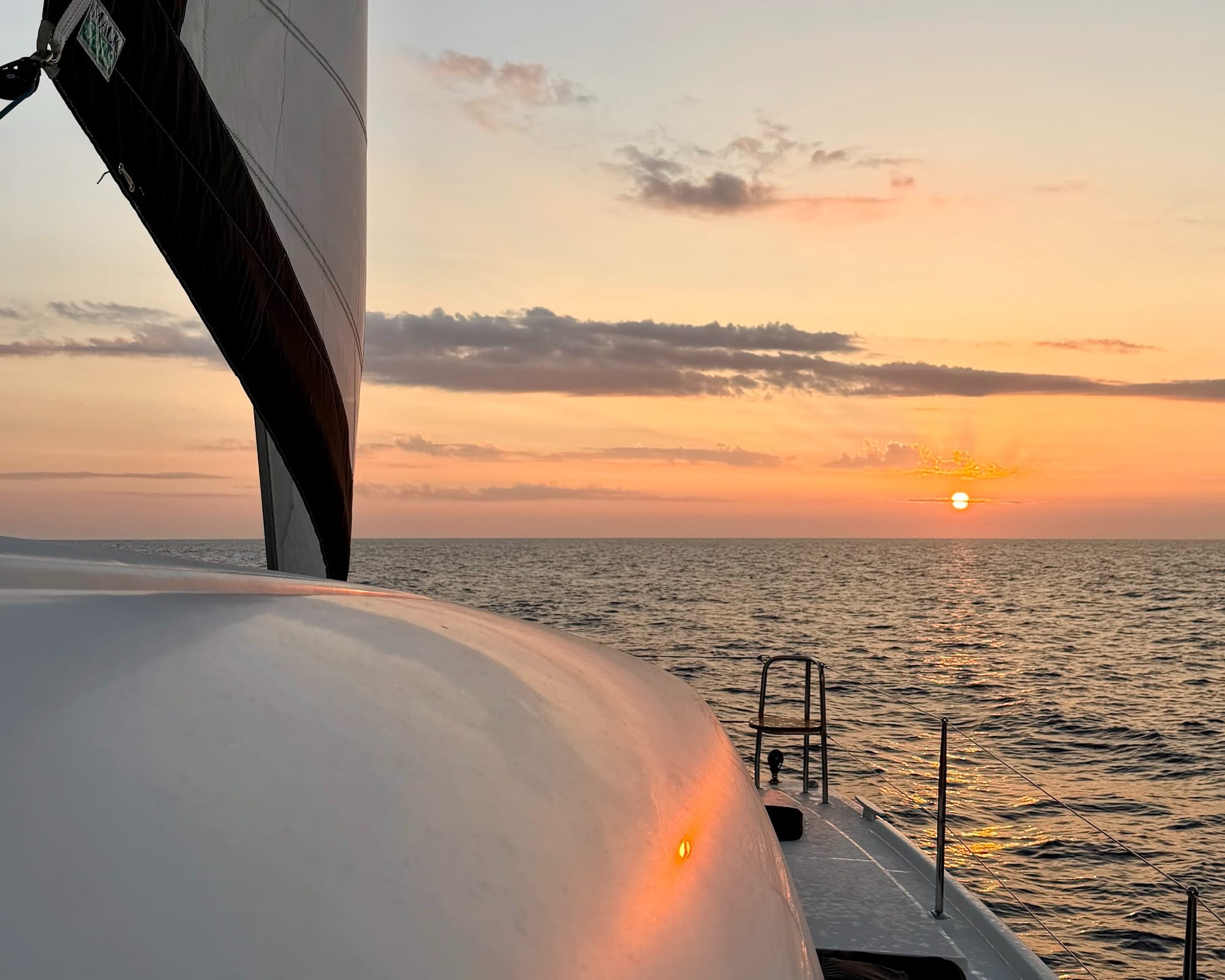
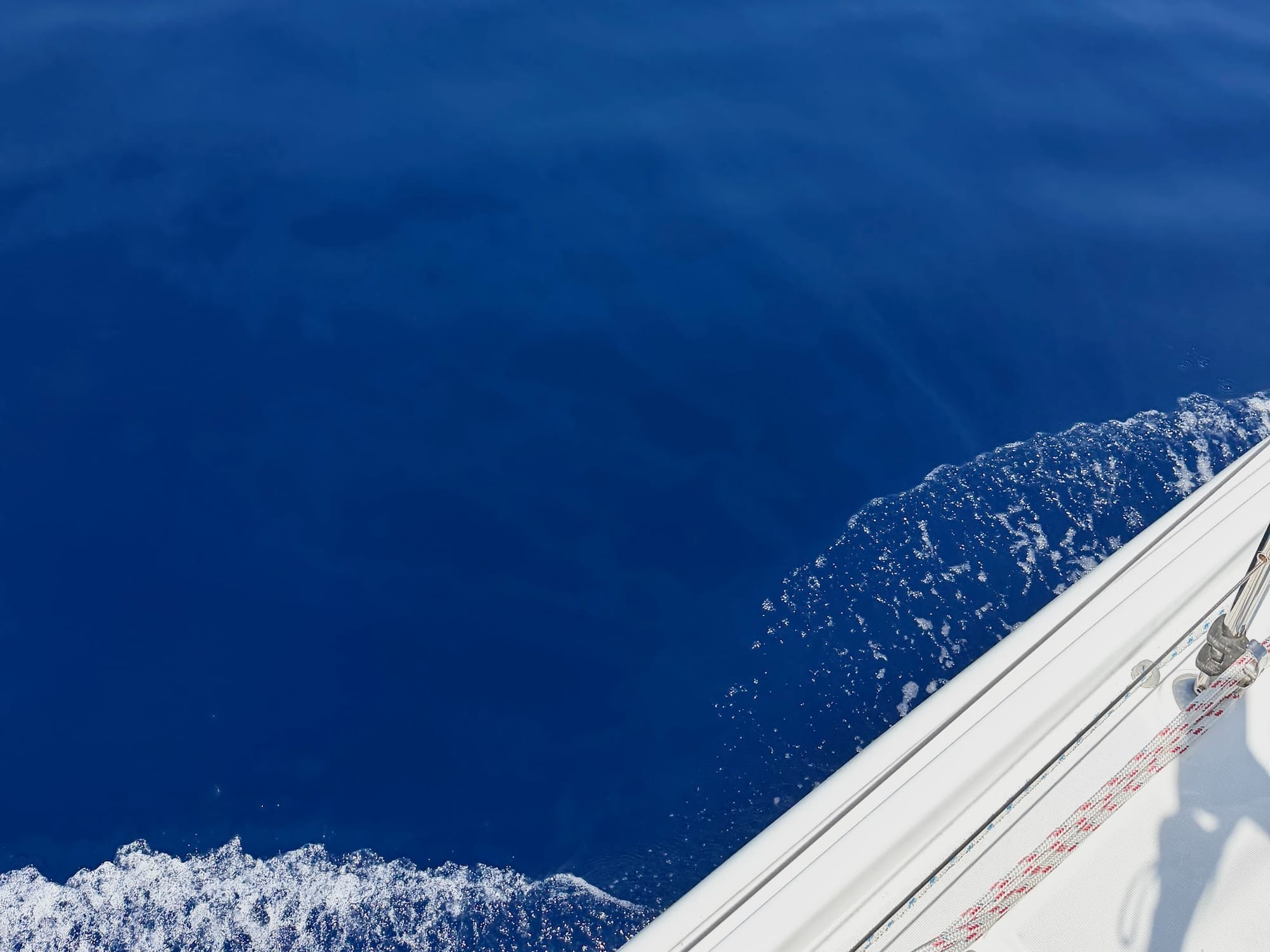
Day three was a blur of sunshine and blue water. The wind speed sat between 0 and 3kn all day. Sabado was a motorboat. We were gliding over 8,000+ft of water. I could see the sunbeams piercing through the surface, causing hundreds of shimmering stripes. It’s such a vibrant shade of blue out here!
We’re usually quick to complain about motoring, but in an attempt to put a positive spin on things, it feels nice to be gentle on the boat. Arriving in port with a long list of repairs after bashing around in the wind and waves sucks. We’ve both gotten a lot of computer work done, which is much easier to tackle in calm conditions. We’re getting tons of solar, so I’ve been able to cook and bake with ease. As we get closer to Australia, we’re trying to eat everything we have on board because when clearing in, they charge you to dispose of anything they confiscate! So, we’re hoping to arrive with the fridges and freezer turned off.
Even though we’d rather be sailing, an easy passage is always a win in our book, so at the end of the day, we’re grateful for that.
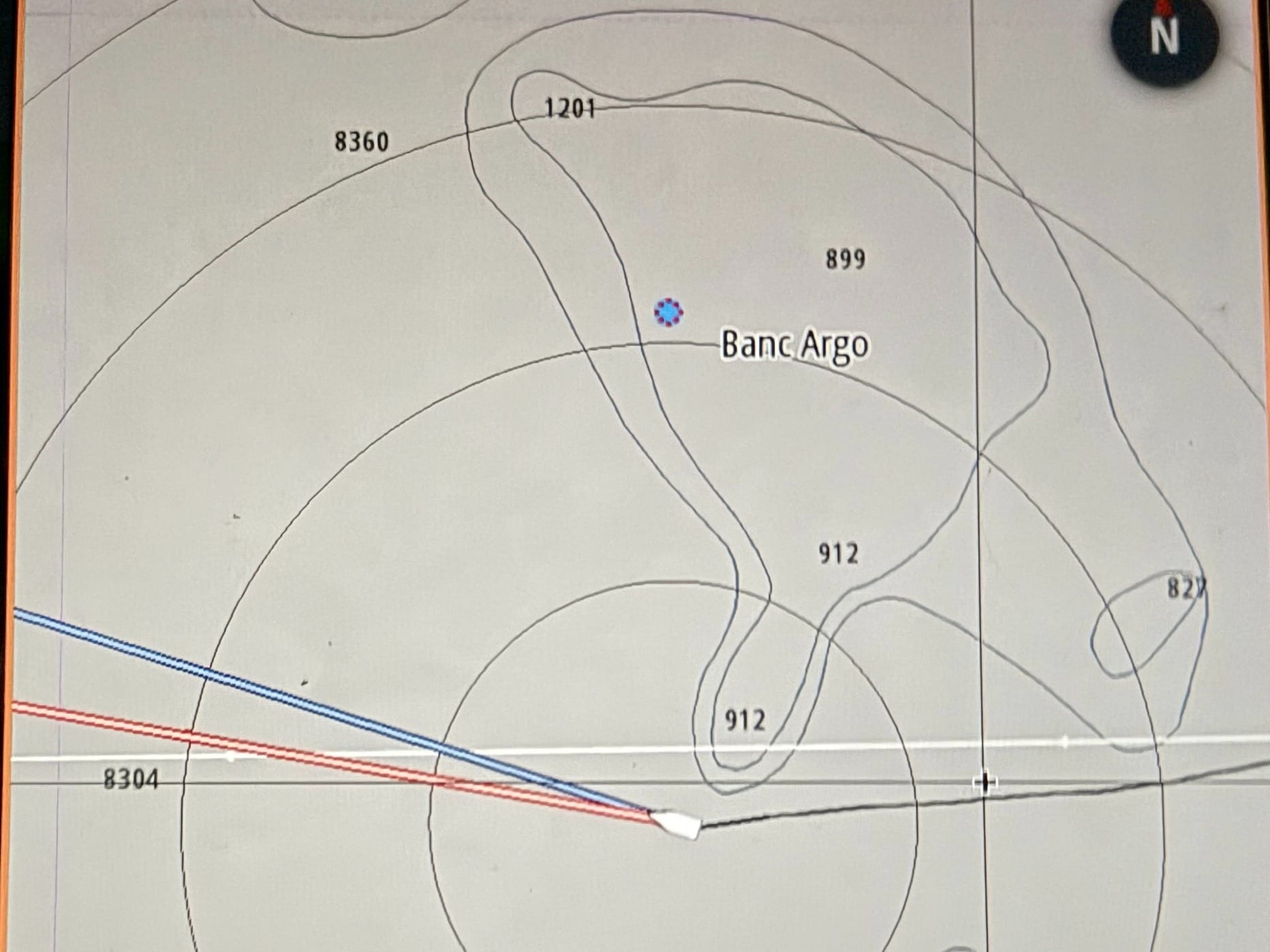
Overnight, we passed Banc Argo, which is classified as a guyot (a flat-topped underwater volcano). It rises from the ocean floor up to a submerged summit plateau generally between 600 and 1,000ft below the surface. It was crazy to see how, although still quite deep, it catches the currents and the sea state became much more bouncy. We didn’t know if there would be FADs, and we had no moonlight, so we decided to route ourselves around it rather than over it.
As we’re posting this, the wind is finally starting to pick up. However, to make the most of it, we’d need to turn south and head towards an area that, from what we can tell, has a high likelihood of thunderstorms and lightning. We’re not sure how strong the conditions are, or whether the wind will even hold out, so we’re going to spend a bit more time researching and monitoring things before deciding whether to alter course. Our chartplotter says we have just 3 more days to go!