
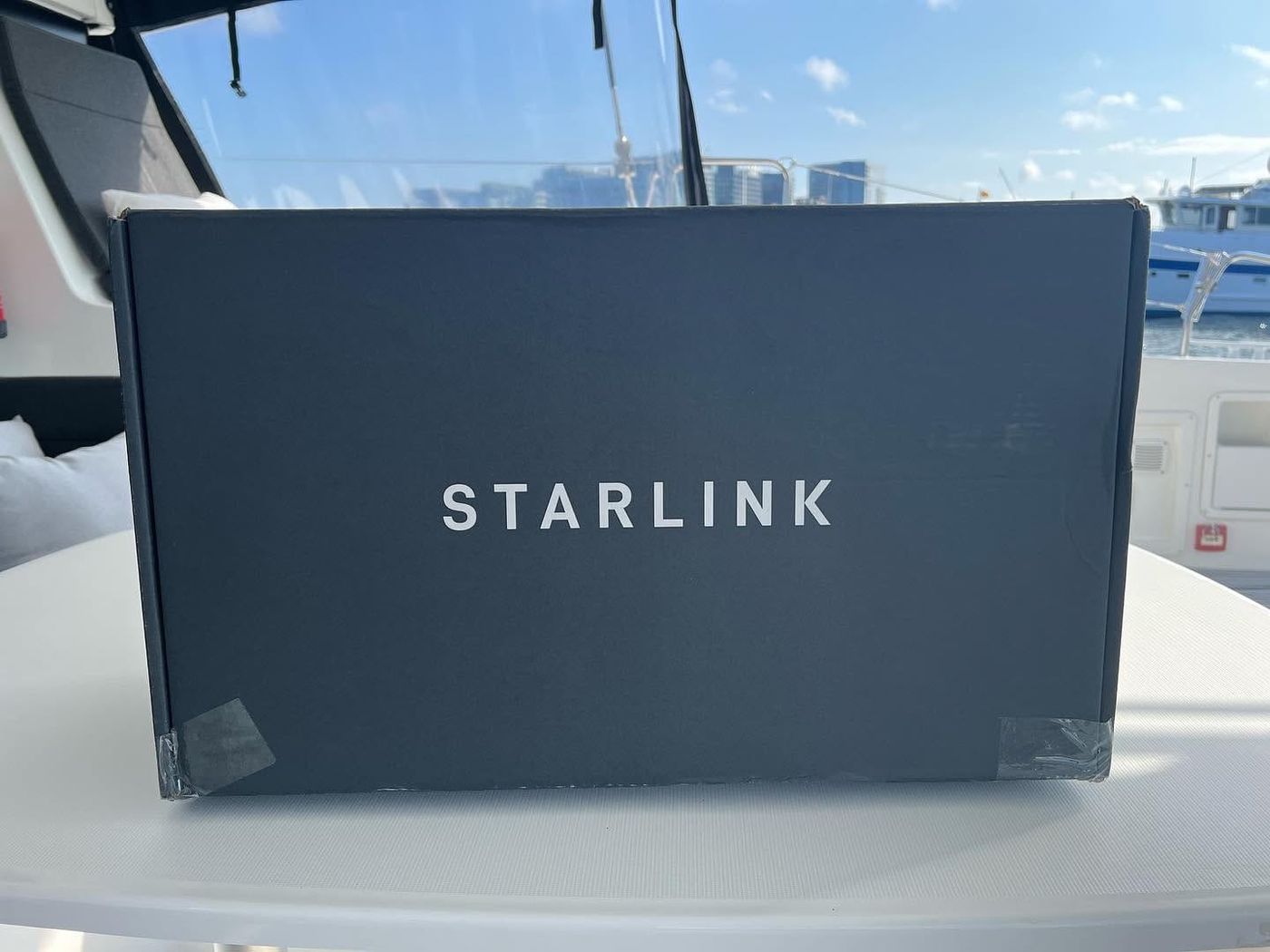
If you cruise internationally and lean on Starlink to stay connected, the rules just changed underneath you. The news landed in mid-July, right as we are staging in Fiji for our run to Australia. So we've had to work this out for real, with actual dates and dollar amounts, not hypotheticals. Here's what changed, what we're doing about it, and what it's going to cost us:
What actually changed
The new rules took effect July 14, 2026 for new customers. Existing customers get pulled in on August 17. If that's you, that's the date to circle on the calendar.
The short version:
- Roam Unlimited now only works outside your registered home country for 30 days at a time. The old policy was 60 days per trip, loosely enforced. Not anymore.
- The cheaper tiered Roam plans (100GB and 300GB) lost international use entirely. Now, you can only use them in your home country.
- The old Global Roam plan ($400/month, unlimited, anywhere on land) is discontinued. The only remaining no-limit international option is Global Priority, which is metered and expensive (more on that below).
- Two exceptions: the US and Canada now count as one "country," and most of Europe counts as another. If you're cruising inside either of those regions, most of this doesn't apply to you. Anywhere else, every border counts.
- Travel Registration is required before your dish will work abroad at all. That means passport, personal details, and a live portrait through the app. Do it before you leave, not from an anchorage with no signal.
Your two ways to reset that 30-day window are to bring the dish back to its home country, or to transfer the account to the country you're actually in. And the transfer has its own catch: once you move a dish to a new country, you can't move it again for roughly 90 days (technically 120 days from purchase or 90 from activation, whichever comes first).
There's also a middle option worth knowing about: upgrading to Local Priority extends you to 60 total international days, but that includes the days you already burned on Roam Unlimited, and the data comes in metered blocks instead of unlimited. And Standby mode ($10/month for about 500 kbps) still works most places; whether idle Standby days burn the 30-day clock is genuinely unclear right now. We'll find out the hard way and report back.
Why this bites cruisers, specifically
We're not returning "home." And we cross borders faster than a 90-day transfer lock is comfortable with. Left unmanaged, you either run out your 30 days and lose service mid-country, or you get pushed onto Global Priority, which at our usage (roughly 500 GB/month, since we work from the boat) would run somewhere between $650 and $765 a month. That number is the villain of this whole post.
Our plan, with real numbers
The route: depart Fiji August 31, Vanuatu through September, New Caledonia through October, first Australian port around mid-November, then south, slowly, to Sydney. We run two dishes: our main Starlink, registered in the US, and a Starlink Mini that's still sitting on its New Zealand registration from last season. That leftover NZ registration turns out to matter a lot.
Protect the one transfer that counts. The main dish stays on its US registration, untouched, all the way to Australia, where we'll be for a while. That way its one important transfer, to a local Australian account (about US$140/month there), is clean and available the day we clear in. Honestly, our first instinct was the opposite: transfer the main dish early since it's the one under pressure. But the lock math kills that idea. Move it to Fiji or Vanuatu and its Australia transfer would still be locked roughly until the day we arrive. Too tight for comfort.
Spend the grace you already own before paying for anything. The Mini's NZ registration has a full, unused 30-day international window sitting on it. So the Mini stays switched off until the main dish's window lapses. Then it comes on, we run that NZ grace down through Vanuatu, and we only transfer it to a Vanuatu account as the grace nears empty, timed to our departure so the fresh 30-day window opens right as we sail for New Caledonia and covers the whole month there. Vanuatu also happens to be the cheapest Roam Unlimited registration on our route at about US$95/month, so the transfer isn't just a clock reset, it's a price cut.
Relay, don't overlap. Two dishes run back-to-back, never at the same time. That's two 30-day windows in sequence instead of one, before anyone transfers or pays extra.
Localize wherever you'll sit longest. The moment we stop moving (Australia, for us) the dish becomes domestic. No clock, no juggling.
And underneath all of it: we gave ourselves permission to arrive in Australia without a hard deadline, because our cellular fallback is strong enough to bridge any gap. That one decision took most of the stress out of the timing.
What it costs
AUG 28, 2026 UPDATE: Starlink has announced that Ocean Mode price increased to $6/GB. The following calculations were made based on the old $2/GB rate.
| Phase | What's running | Rough monthly cost |
|---|---|---|
| Fiji, pre-departure | Main dish (US Roam Unlimited) + local SIM for bulk data | ~$175 + $15 |
| Passage Fiji to Vanuatu | Main on Ocean Mode, ~$2/GB, low-data (~4–5 GB/day) | ~$100 for the passage |
| September, Vanuatu | Mini on its grace, then Vanuatu Roam Unlimited | ~$105 |
| October, New Caledonia | Mini's fresh window, free if the timing holds | $0 (worst case ~$400 on metered data) |
| Passage to Australia | Main on Ocean Mode again | ~$100 for the passage |
| Australia onward | Main localized to AU (~$140) + cheap local cellular | ~$140 + a bit |
Steady state is basically one Roam Unlimited subscription plus a cheap SIM. Compare that against $650 to $765 a month on Global Priority and the juggling starts to look very well paid.
The gear that makes it work
None of this works unless we can move fluidly between satellite and cellular and grab whichever is cheaper right there.
Satellite side: two dishes. The standard as primary, the Mini as reserve. That's what gives us the two independent grace windows the relay depends on, plus real redundancy if a unit dies mid-passage. We've met enough cruisers with failed GPS chips to take that seriously.
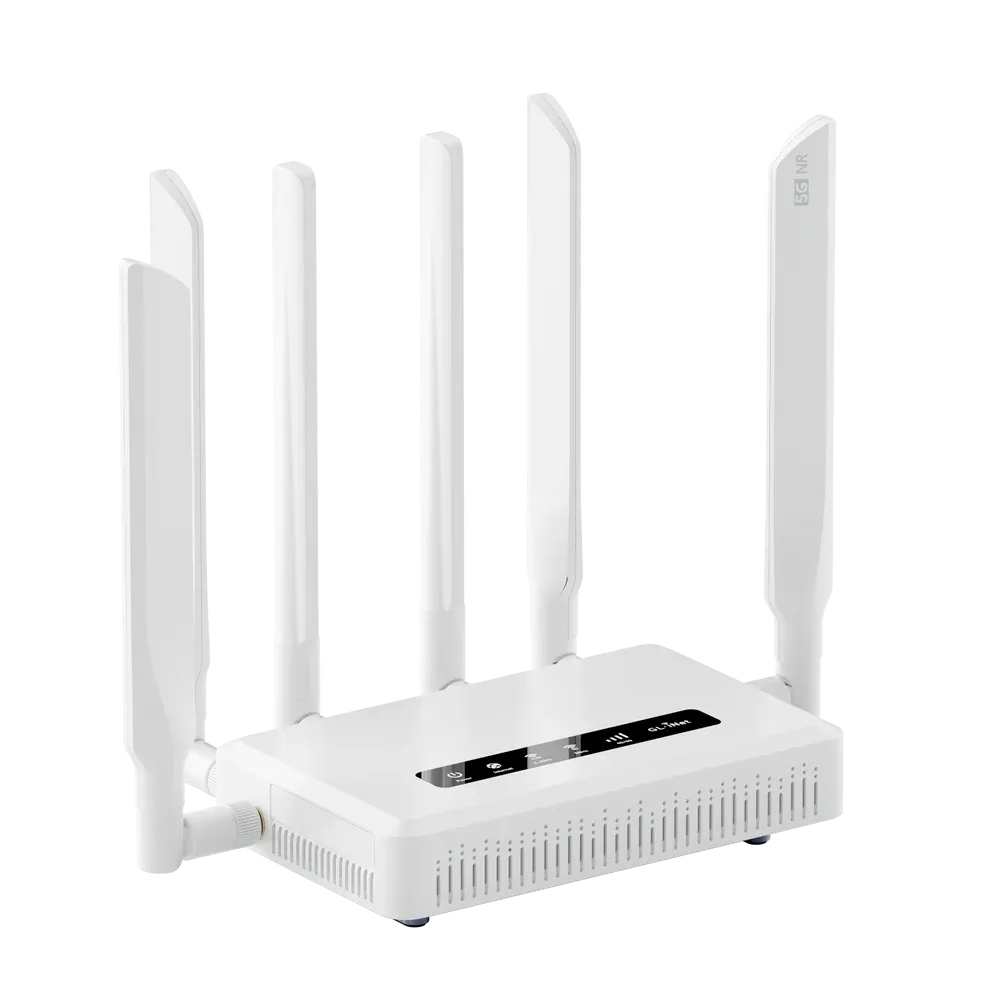
Cellular side: a GL.iNet Spitz AX (GL-X3000), a 5G router with two SIM slots and automatic failover. One slot holds a cheap local data SIM for wherever we are. The other holds a SIMPoYo reprogrammable eSIM card, loaded with a profile for the next country, so we have coverage the moment we drop anchor and a cross-network backup the rest of the time. The eSIM data isn't cheap ($1.50 to $2.50/GB), but that's not its job. Its job is day one and failover.
And here's why the cellular side isn't an afterthought. The per-gigabyte spread is enormous:
- Fiji: Digicel sells 250 GB for FJ$35. That's about six cents a gigabyte, against roughly $2/GB on Starlink's metered priority data. Thirty times cheaper. We're pushing every heavy upload and backup through that SIM before we leave.
- Australia: Telstra-network prepaid runs roughly US$0.11 to $0.25/GB while moving, and a Telstra 5G home-internet plan (1 TB for AU$85) works out to about six cents a gigabyte at a marina. That's cheaper per GB than the Starlink flat plan itself, never mind priority data.
- Offshore: about $2/GB on Starlink, and worth every cent, because it's the only thing out there.
That six-cents-versus-two-dollars gap is the whole game. Starlink priority data is for the ocean. On land there's almost always something dramatically cheaper sitting right next to you.
The playbook, if your route isn't ours
Strip away our specifics and it comes down to this. Know where each dish is registered and what that registration costs; prices vary a lot by country, and a transfer can be a price cut. Treat unused grace windows as currency and spend them before you transfer. If you run two dishes, relay them rather than burning both clocks at once. Localize wherever you'll linger. Do Travel Registration for every dish before you need it. Check whether your cruising ground falls inside the US-Canada or Europe regions, because if it does, your life is much simpler than ours. And always, always compare the real cost per gigabyte before you buy. The cheapest data on your route is probably in a local SIM, not in the sky.
Keep a cellular fallback you actually trust, and the satellite rules lose the power to strand you.
The honest caveats
A few things in our plan are bets, not certainties. We don't know yet whether idle or Standby days burn the 30-day clock. October being free versus costing $400 hinges on it. We're assuming Vanuatu offers a roaming-capable plan at all (if it's residential-only, we fall back to a Fiji transfer). New Caledonia coverage is newish, so we'll re-check the map in Port Vila and arm the priority-data toggle there, in port, because once you're in an unserved cell you may not be able to switch it on from the boat.
And the biggest caveat of all: Starlink changed these terms twice this summer before landing on the current version. A 14-day limit was published and pulled in June. Everything above is accurate as we write it. Reconfirm before you commit to anything.
We'll report back once we're through to Australia with what actually happened versus the plan. If you're working the same puzzle on your own boat, come compare notes. That's half the fun of the anchorage anyway.